
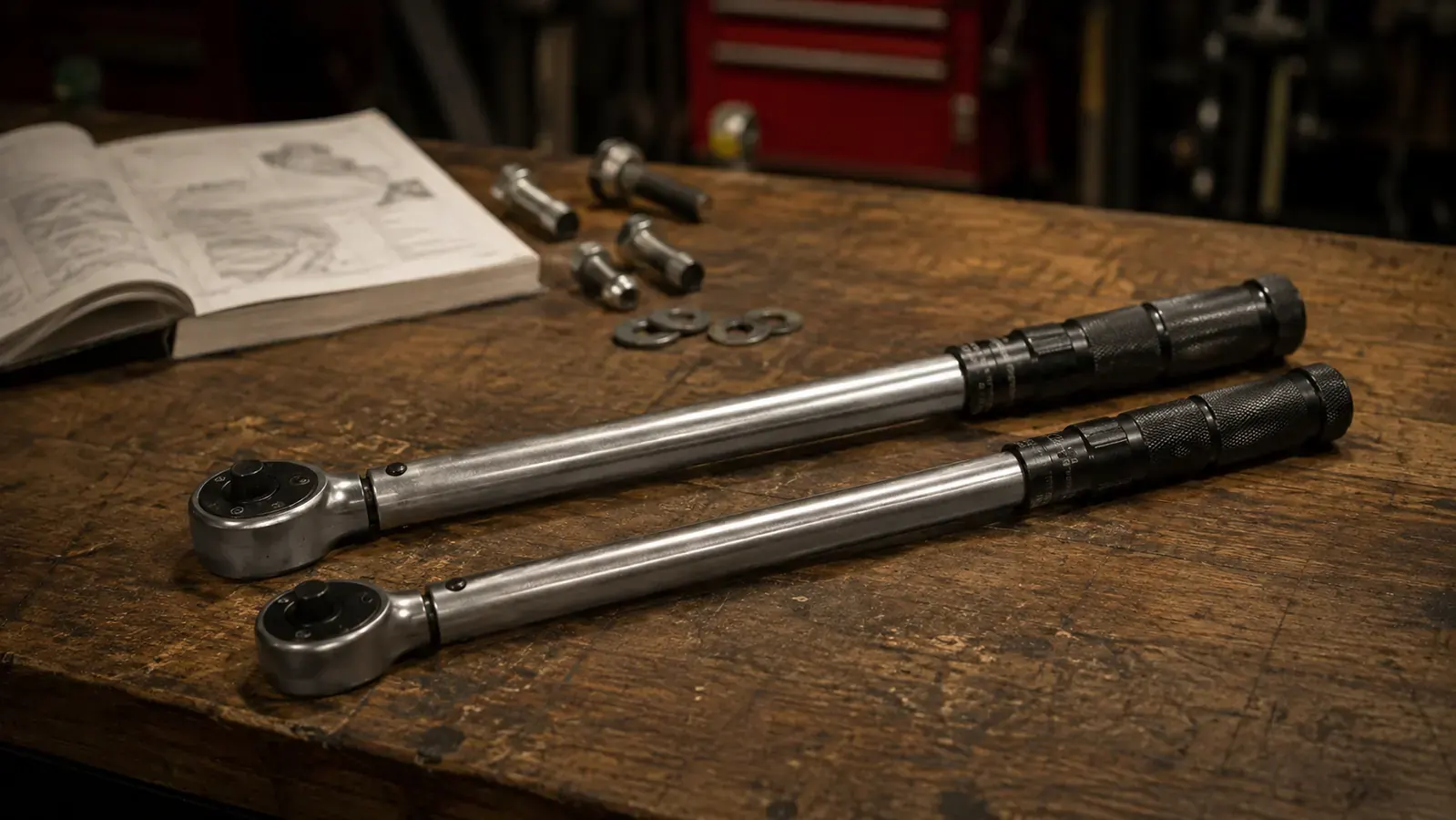
I have rebuilt top ends, torqued triple clamps, and set main caps to spec on my bench for years, and I have owned both of these click wrenches. The short answer before I get into the weeds: for the kind of work I do on builds, the LEXIVON LX-183 is the one that stays in my box, and the EPAuto is the one I hand to a buddy who needs to torque a lug for his truck and does not want to hear about calibration. They sit in the same street range on any given week. They are not the same tool.
Both are 1/2-inch drive click wrenches rated for the fastener sizes you actually run on a bike and on a truck: engine covers, axle nuts, caliper brackets, wheel hubs, and the big head bolts that decide whether a build stays together. I have used both across a couple of seasons on crankshaft work, cam caps, clutch baskets, swingarm pinch bolts, and the occasional big-rig fastener. The difference is not in the sticker on the side. It is in how the wrench behaves at the low end of its range, how repeatable the click is, what it takes to reset and store it, and what happens the tenth time you use it, not the first.
| LEXIVON LX-183 | EPAuto | |
|---|---|---|
| Street price | Usually sits at the top of the street range | Usually a bit less on the street |
| Low-end range | Starts at 10 ft-lb, so it reaches small engine covers and clutch bolts | Bottom of the range sits higher, less useful for delicate fasteners |
| Click feel | Clear, consistent click you can feel through the grip | Clicks but feels softer, easier to overshoot on a fast pull |
| Warranty | Lifetime warranty on the tool | Standard warranty only |
| For occasional use | More than the guy towing a trailer twice a year needs | Fine for lug nuts and the odd suspension bolt, no complaints |
| Ergonomics | Good knurled grip, easy to read markings | Comparable feel in the hand, no real advantage either way |
| Best for | Builds and engine work where you trust the number | General maintenance and the guy who never changes torque |
The wrench I trust on head bolts, not just lug nuts
When a fastener decides whether a build stays sealed, I reach for the LEXIVON LX-183. Reliable click, a low end that reaches small engine fasteners, and a lifetime warranty behind it.
Amazon Check Today's Price on Amazon →How I Checked Them
I did not evaluate these on a spec sheet. I set both wrenches to the same numbers and ran them against a beam-style tester in the shop, then used them the way I actually do. That means cam cap bolts down in the valley of a twin, cover plate screws, clutch basket nuts, axle pinch bolts, and the big head bolts on a top end I was assembling. I also packed both in a drawer and left them overnight at their low setting, the way most people actually store a wrench, then pulled them out and checked whether the numbers still held. I dropped one of them off the bench during the week, on purpose, to see how it reacted. Evidence on how a tool handles a mistake tells you more than a clean bench test ever will.
What I was looking for was not which one was prettier. A click wrench fails in one of two ways: it gets sloppy and clicks late, which risks a loose fastener backing out, or it clicks early, which risks a thread stripped or a cover warped. A cheap wrench that reads fine on a bench but drifts after a season of use is worse than one that is slightly less accurate but reliable about it. Both of these wrenches held their calibration through the check. The LEXIVON held mine more reassuringly click after click, and that repeatability ended up mattering more than the paper difference in their rated accuracy. A number you can trust every time beats a number that is a hair closer but that you never quite believe.
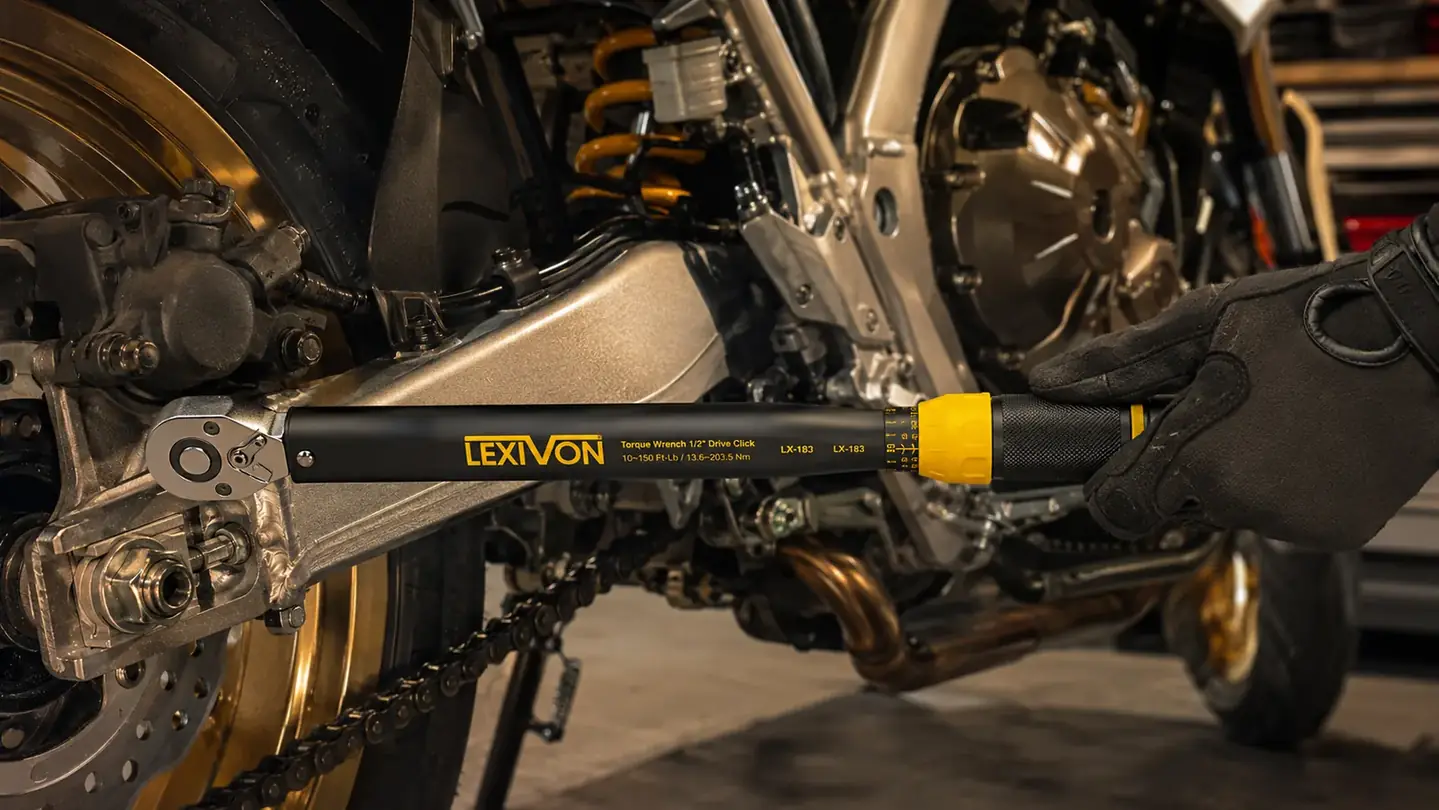
Where the LEXIVON Wins
The first reason I keep the LEXIVON LX-183 on my bench is the low end of its range. It starts at 10 ft-lb. That matters more than most people expect, because a lot of motorcycle fasteners live down there: camshaft caps, small engine covers, oil drain plugs on some bikes, and the little bolts that strip if you look at them wrong. The EPAuto bottom ends higher, so for those delicate fasteners I was already reaching for a smaller 3/8-inch wrench anyway. The LEXIVON covers that territory with the 1/2-inch drive I already have in the box. On a build that means one wrench, not two, reaches from the cam caps at 12 ft-lb up to a rear axle nut at 100 ft-lb, and I do not have to switch drives in the middle of a job.
The other reason is the click itself. A click wrench earns its name by telling you when you hit the number, and the LEXIVON has the most positive, repeatable click of the two. I can feel it through the grip on a slow pull, and that is exactly what you want when you are setting a head bolt to 32 ft-lb and you would rather be half a pound light than a pound hot. On engine work, where overshooting is how threads strip and covers warp, that difference is the whole game. The EPAuto clicks, but it is softer and easier to blow through on a fast pull, and on a fastener you cannot see, buried in a frame, that softness is exactly when you overshoot and strip it. The LEXIVON gives me a warning I can feel before the damage happens.
Then there is the warranty and the way the tool is put together. LEXIVON backs the LX-183 with a lifetime warranty on the tool itself. Torque wrenches take abuse, and they are the one tool in my box that I have dropped off a bench more than once. Knowing a misstep gets me a replacement instead of a new wrench changes how you treat the tool and how much you trust it on a build you intend to ride. Beyond the paper, the knurled grip and the collar that locks the setting make it a pleasure to reset between fasteners. A torque wrench you avoid resetting is a torque wrench you stop using, and the LEXIVON is the one I do not mind dialing down and back up a dozen times in a row on a cylinder head.
On engine work, where overshooting is how threads strip and covers warp, that difference in the click feel is the whole game.
Where the EPAuto Wins
I am not going to pretend the EPAuto loses everything, because that is not true and it would make this whole comparison dishonest. It wins on street price, plain and simple. It usually comes in a bit under the LEXIVON, and for a guy who tows a trailer, torques the occasional suspension bolt, and otherwise lets a shop do the engine work, that cheaper number is the right answer. You do not need accuracy down to 10 ft-lb to set a lug nut, and the EPAuto handles that job all day, every day, with zero complaints. It is the wrench you grab when you do not want to worry about whether you are clamping down a fastener that decides whether a crankcase stays sealed.
It also wins on simplicity for the casual user. There is no need for the low-end precision and the firmer click that I care about on a build. If your torque wrench gets used a handful of times a year and mostly on big fasteners like wheel lugs, caliper slide bolts, and suspension pivot bolts, the EPAuto's softer click and higher bottom end will never cost you anything, because you will rarely be anywhere near its limits. It is a genuinely capable cheap wrench, and for a lot of riders it is all they ever need. That is not a knock against it. It is knowing the difference between a tool built for daily engine work and a tool built for occasional maintenance, and the EPAuto nails the second job.
Here is the honest concession. On the work it was built for, the EPAuto gives nothing up to the LEXIVON. On a wheel hub at 90 ft-lb, both clicks, both hold, both leave the fastener torqued to the same number. If I were a rider who never tore into a motor and only used a torque wrench for tires and towing, I would be hard pressed to justify the LEXIVON's premium. The soft click never bothers you on a big fastener because you have plenty of leverage and plenty of warning. It is only when you come down into single-digit and low-teen territory that the two wrenches stop behaving like equals, and that is exactly the part of the range a maintenance-only guy almost never visits.
The Low-End Tradeoff Both Share
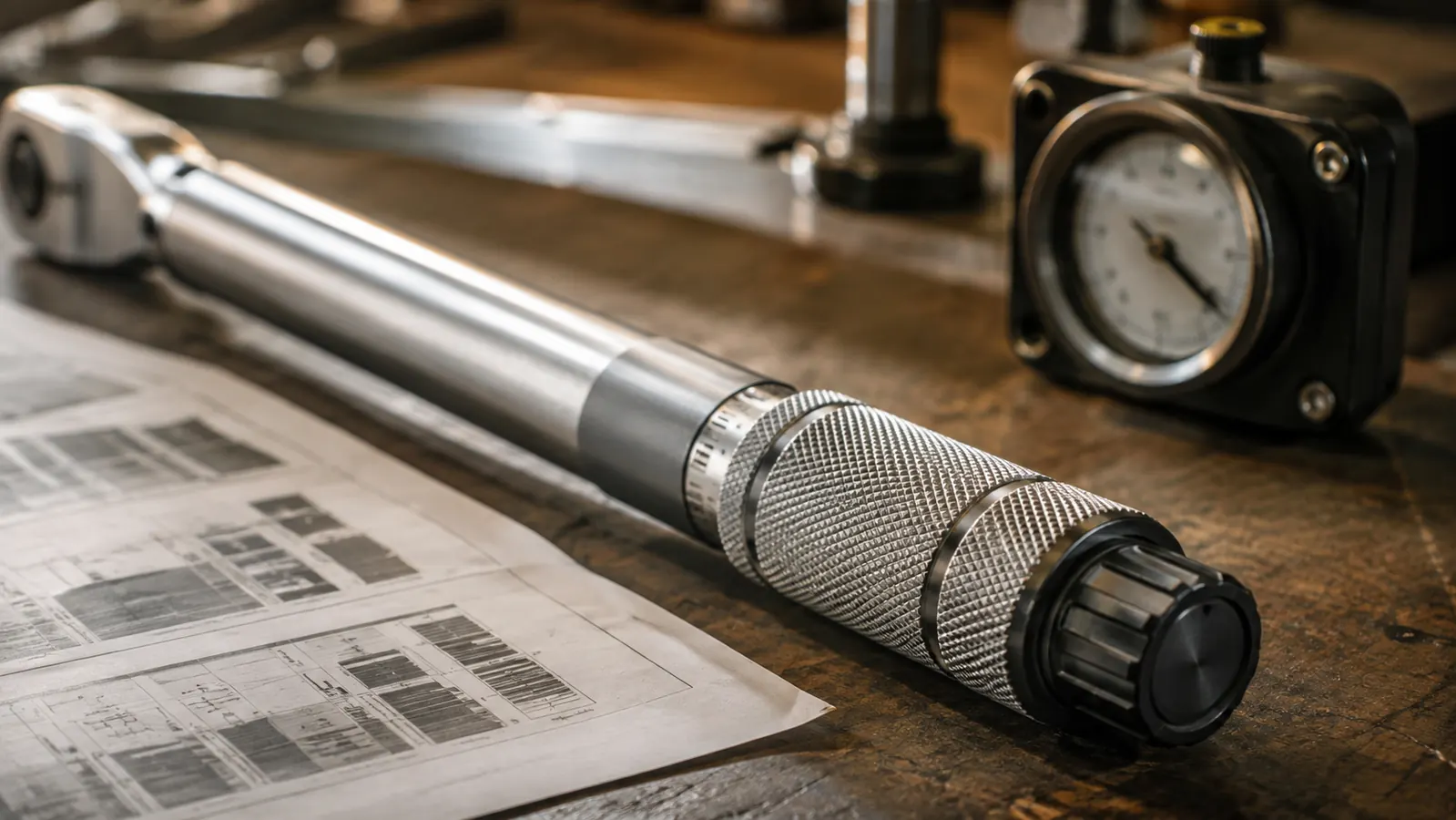
Be honest with yourself about one thing before you buy either. A 1/2-inch drive wrench is not the tool for every fastener on a modern bike, no matter how good its low end is. Below roughly 10 ft-lb, both of these are out of their element, and you are better off with a 3/8-inch or 1/4-inch wrench for the fiddly valve cover screws and tiny clamp bolts that want single digits. If you are building engines you will end up with matching drives eventually. Pick whichever of these fits your budget for the mid-range and higher work, and do not pretend a 1/2-inch click wrench is a substitute for a smaller one on the small stuff. The LEXIVON stretches further down than the EPAuto, but neither one replaces a proper small wrench for a 6mm cover screw.
The other habit that applies to both is storage. A click wrench is a precision instrument with a spring inside, and leaving it cranked up to its maximum setting can fatigue that spring and let the calibration drift. Set it back down to its lowest value before it goes in the drawer, and if you drop it hard, recheck it. Neither of these wrenches drifted during my time with them, and after I dropped the one off the bench it still read true the next morning, which is more than I can say for a couple of precision instruments I have owned. But the guy who snaps a head bolt because he stored a wrench wrong was not the fault of the brand. It was the storage. Treat either one like a tool that can be damaged and it will stay true for years.
Who Should Buy Which
If you build, which means you are torquing engine fasteners, brake calipers, triple clamps, and anything that goes inside a motor, buy the LEXIVON LX-183. The low-end range, the clear click, and the lifetime warranty are worth the difference, and you will use all three more often than you think. The 10 ft-lb floor alone keeps it useful across more of a build than the EPAuto can reach. When I am working down the valley of a twin setting cam caps at 14 ft-lb and then moving up to a clutch basket at 25 and a main cap at 60, I want a wrench that clicks the same every time and a warranty that has my back when I drop it. That is the LEXIVON, and it is why the same wrench has stayed in my box for the better part of two builds.
If your torque wrench is for lug nuts, suspension bolts, and the occasional bolt you want to stop guessing at, buy the EPAuto and keep the difference in your pocket. There is no shame in that, and it is the honest call. You are paying for precision you will rarely touch, and the EPAuto is a perfectly solid wrench for the work you actually do. My rule is simple: precision work gets the LEXIVON, and the general bolt tightening gets whatever is already in my hand. If that makes the LEXIVON the one I reach for on a build, it is because a build lives on the number. If you do not live on the number, the EPAuto is the one that earns its spot on your shelf, and I would tell you the same thing across the workbench.
One last honest note that applies to both of these before you check today's price: they come factory calibrated, but neither brand re-certifies a torque wrench for free. If you are the kind of rider who torques a head bolt every other weekend, that does not matter much, because drift is slow and you usually catch it when a fastener feels wrong. If you are assembling engines for a living and the number has to be right every single time, a click wrench you use hard is worth checking against a beam tester once a season, and in that case the LEXIVON's lifetime warranty means a damaged unit gets a replacement instead of a fresh purchase. That is a real difference over a few years, even though it never shows up in the sticker price. Match either wrench to the work, store it right, and it will stay honest longer than most owners actually use it.
Buy it once, torque every build to spec after that
The LEXIVON LX-183 has earned the permanent spot on my bench. If you are done guessing at fasteners by feel, this is the wrench that fixes it.
Amazon Check Today's Price on Amazon →