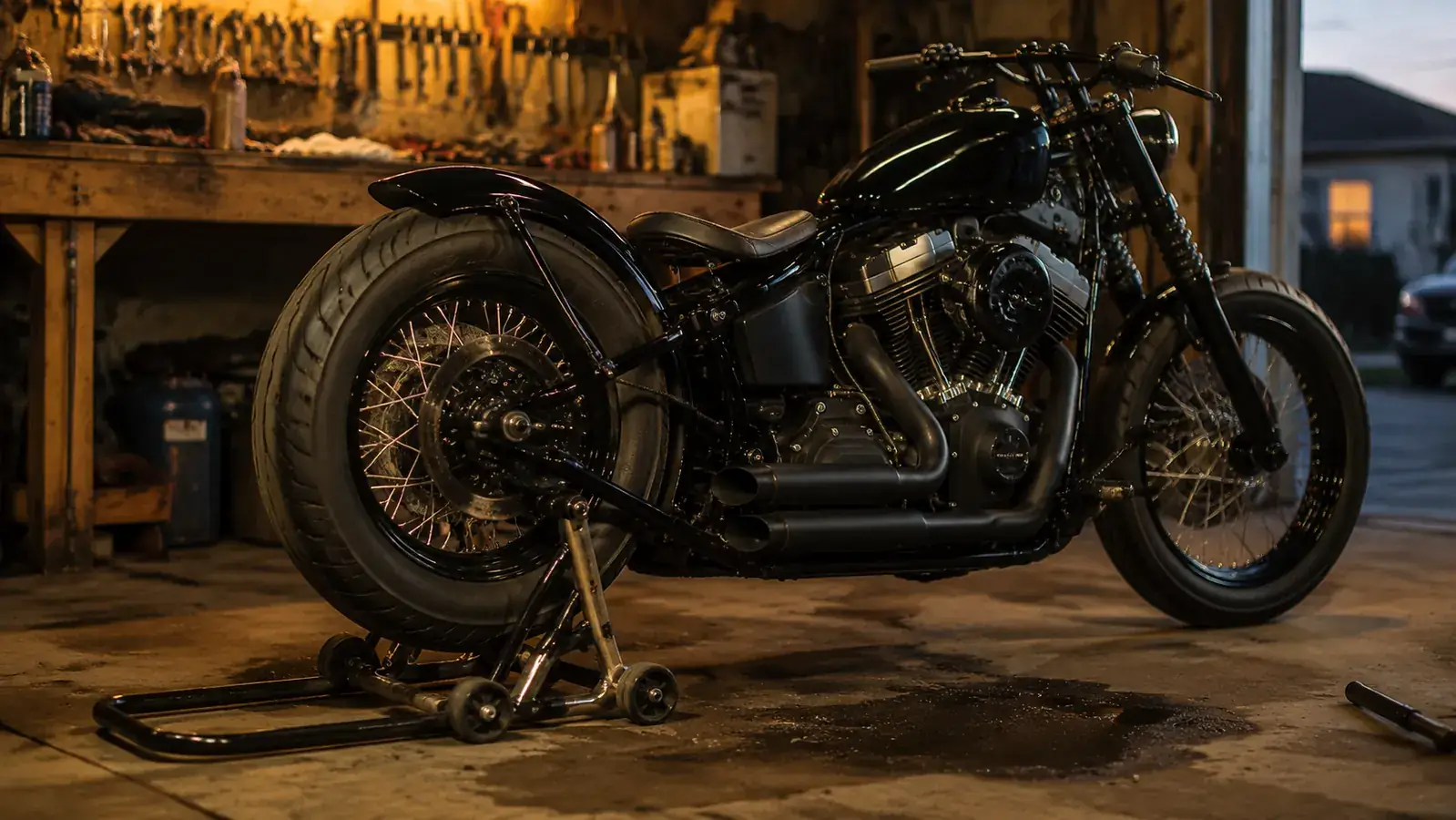
Nine months ago I was done balancing my Sportster on the side stand, one knee in the gravel, trying to rotate the rear wheel by hand while I sprayed chain lube and hoped I reached every roller. You know the routine. You miss the same spot twice, do the job over, and wake up the next morning with a back that remembers. I tried the brick and the chunk of 2x4 before I gave up on improvised solutions. I settled on the GRAND PITSTOP Groller because it fixes the actual problem. Most stands lift the wheel clear, which means you cannot spin it, and that is useless when your whole job is turning the tire for chain and tire work. The GRAND PITSTOP goes the other way: it cradles the rear tire on two rollers so the wheel stays in contact and turns free.
The Quick Verdict
For chain lube, tire cleaning, and wheel inspection, the GRAND PITSTOP Groller is the cheapest thing I have found that actually ends the side-stand spin. It is not a lift, and the 240mm width ceiling and 600lb limit matter, so read those before you buy.
Amazon Check Today's Price →Stop cleaning your chain on your knees.
Nine months in, the GRAND PITSTOP Groller is still the first thing I roll out before a chain job. If you ride a sub-600lb bike with a tire under 240mm, this is the low-cost stand that makes the job one-handed.
Amazon Check Today's Price on Amazon →How I've Used It
The GRAND PITSTOP Groller is not a lift and its name is honest about that. You do not jack the bike up. You roll the rear wheel onto the stand, either from the back or by rocking it over the low arms, and the tire drops into the trough between the rollers. The rear wheel ends up an inch or two off the floor, spinning free, while the front stays planted on the ground. The whole thing takes about ten seconds once you have done it a few times, and you do not need a second person, which matters more than it sounds when you wrench alone.
It has lived in my shop since early January and sees a job at least every couple of weeks. On my 2011 Sportster 48 that means a chain soak and wipe down, a full tire detail, brake caliper inspection, and the occasional check of the rear sprocket teeth and cush drive. I also ran it under the big-bore build I keep on the bench, a 1275 kit that comes in well under the weight ceiling, and it held that instance fine too. Roll the tire in, set it square, and the bike sits there steady while you work both sides without kneeling once.
The build quality is what I expect at this money point, and a little more. The arms are square steel, the rollers are padded and spin on their bearings, and the whole thing folds flat when I need the floor back. Nothing has snapped through the season, the padding has not delaminated, and the hardware has stayed tight through months of vibration and chain-lube grime. For the price GRAND PITSTOP asks, that is more stand than the numbers suggest. There is no paint flaking off the frame and no bearing noise in the rollers, and I have had this thing under a running rear wheel more times than I can count.
The Chain Job That Made a Believer
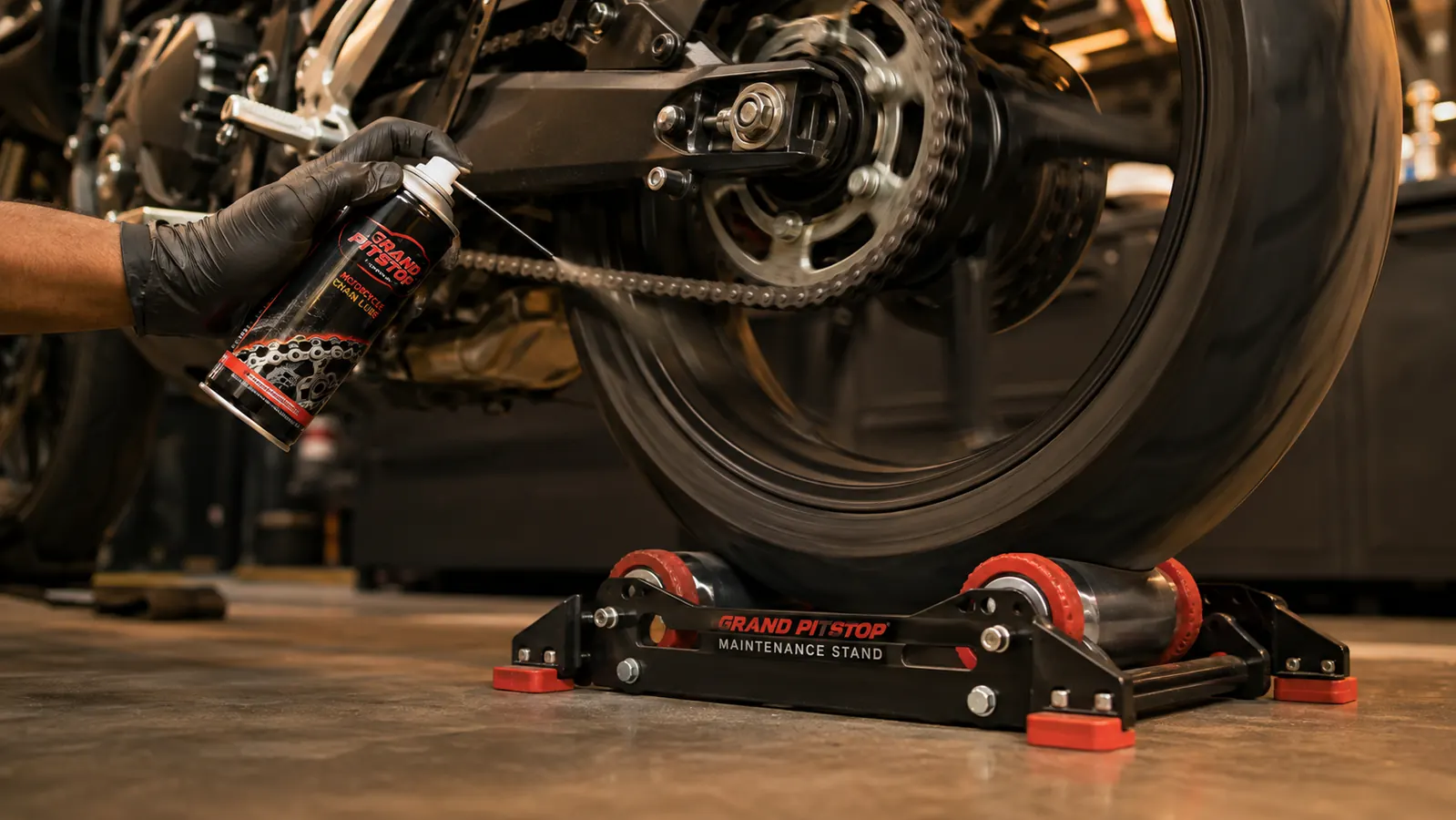
The moment it clicked was a wet Tuesday in April. I had a short window before a ride and the chain was crusted after a week of rain and road salt. With the side stand, that job would have gone half done and left me missing half the rollers on the top run, because the chain hangs at an angle and you can never see all of it. On the GRAND PITSTOP I rolled the rear wheel on, spun the wheel by hand with a clean rag over the top run, and watched the chain move through my fingers like a belt on a machine. Every link, every pin, every plate came through my hand as it turned.
That is the real reason to own one. A chain is only as good as its lube coverage, and coverage means seeing every roller as it passes. The roller stand lets you turn the wheel slowly and hit every single one. I can do a proper clean and lube in the time I used to spend just getting set up with the side stand and a brick. It trimmed my weekly maintenance from an event to a chore I actually do on schedule, which is worth more than the stand costs. A clean, lubed, properly adjusted chain is what keeps a driveline quiet and a rear sprocket from shedding teeth, and this stand is what finally got me doing it week after week instead of putting it off.
I can do a proper chain clean and lube in the time I used to spend setting up the side-stand balancing act. That one change got me doing the job on schedule instead of putting it off.
Where the Steel Proves Itself
The thing I did not expect is how much I would use it for tire detail. A black wheel shows every bit of chain lube fling and road film, and getting at the back of the wheel without a stand meant crouching and leaning over the fender. On the GRAND PITSTOP the wheel sits at a working height and spins, so I can scrub the full face, the spokes, and the sidewall without moving the bike. It turns a 40-minute crouching job into ten minutes at bench height, and the result looks better because I can actually see the whole wheel as it rotates in front of me.
It also does quiet duty as a parking spot for a project. When I pulled the rear wheel off the Sportster for a tire swap, I dropped the bare swingarm end onto the stand to keep the bike upright and level while I worked the axle and the brakes. The padded rollers did not scuff the swingarm, and the stability was good enough that I never second-guessed leaning on the frame to break a stubborn bolt loose. A stand you can trust under a half-disassembled bike is worth a lot, because that is exactly when geometry and stability matter most.
The steel has held up to all of it. No flex I can feel at the rated weight, no slop in the rollers after the two or three hundred pounds of bike has rolled over them hundreds of times. The welds are clean for the money, and the pivots have not worn loose. This is not a prettied-up catalog piece with a polished paint job that hides thin metal. It is a functional shop tool that grinds its way through a hard season and looks ready for the next one. That is the kind of build quality I care about in the shop, and I have sent parts back for less.
The Limits Nobody Mentions
There are real limits, and you should hear them from someone who has lived with the stand instead of from the product page. First, it is not a lift. If your goal is to pull the rear wheel, you still need a paddock stand or a jack. The Groller keeps the wheel in contact, which is the whole point for chain work, but that also means you cannot drop the wheel out with this stand alone. It does one job, and it does that job very well, but it does not do everything.
Second, the numbers matter and they are not marketing speak. It is rated for bikes under 600lb and tires under 240mm. My Sportster fits easy, but if you ride a loaded touring rig pushing past that weight, or a fat rear hoop over about 9.5 inches, check the ceiling before you buy. A heavy bike on a stand it was not built for is how you get a bent arm and a tipped machine. The rating is there for a reason, and going past it on a roller stand is not the place to push your luck.
Third, it wants the bike centered. If you drop the tire in crooked, the wheel will walk toward one roller under power and the stand tries to crab sideways. You learn to set it square in a couple of seconds, but it is a finesse thing, and it is exactly the kind of detail the five star reviews never mention. None of these are dealbreakers for me. They are just the honest edges of a cheap, useful tool, and I would rather tell you about them than let you find out the hard way on a bike you care about.
What I Liked
- Rear wheel spins free for chain lube, tire cleaning, and inspection
- Cheap enough to keep one in the shop without thinking twice
- Stable once the bike is rolled in, no straps needed for light work
- Padded rollers cushion the rim and the swingarm
- Folds flat when you need the floor back
Where It Falls Short
- Does not lift the wheel clear, so you still need a lift to pull the rear wheel
- 600lb and 240mm ceilings shut out heavy touring bikes and fat rear hoops
- Fussy about being centered or the wheel wants to walk under power
- The base is light, so you want the bike settled before you lean on it
The Long Haul: Nine Months of Wear
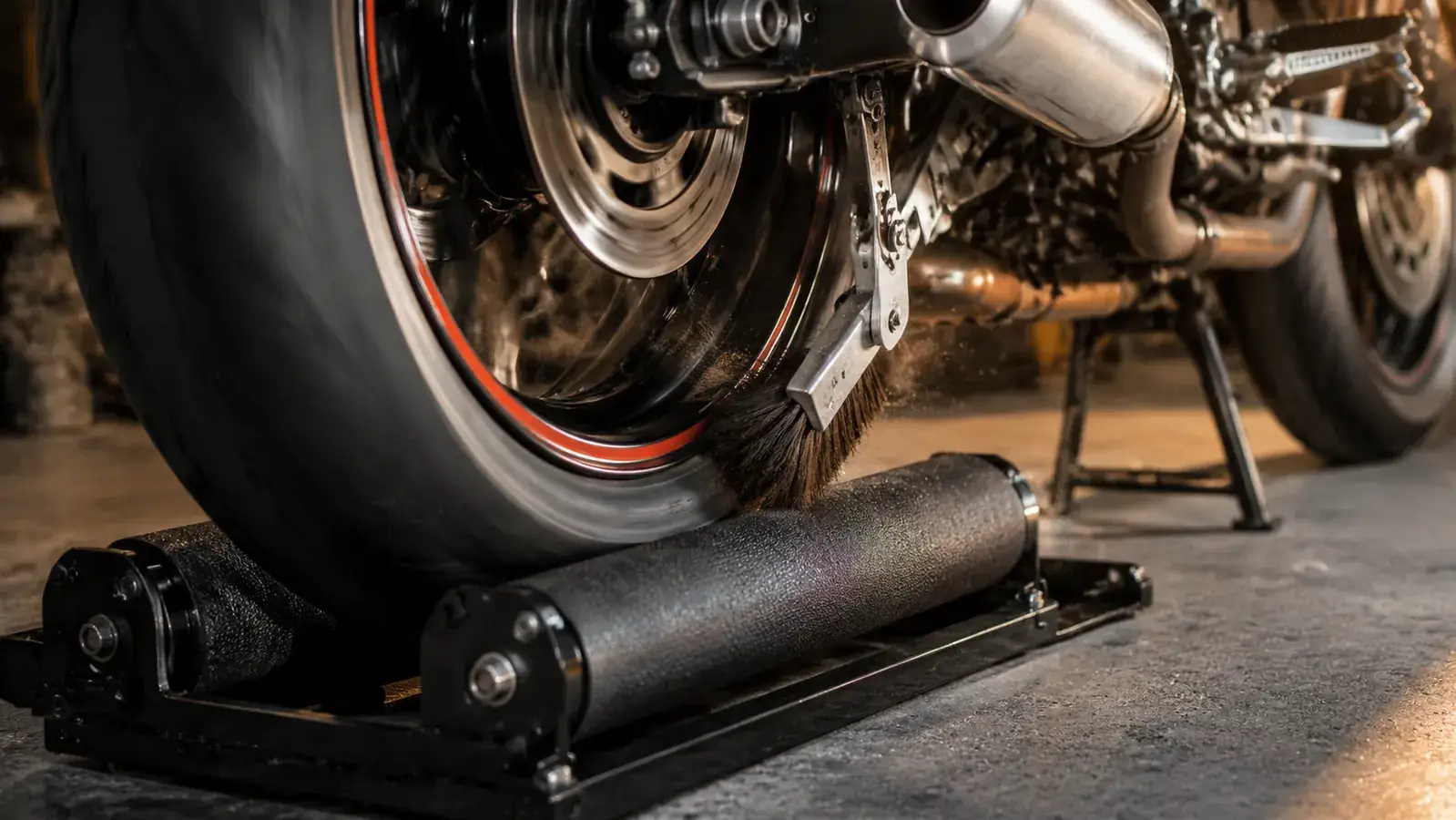
After nine months I can tell you what lasts and what does not. The rollers still spin freely and the padding still holds the tire, even after being soaked in chain lube and brake cleaner dozens of times. The frame has no rust past a few surface specks where a wheel rolled over the edge, which is normal shop wear and not a defect. The folding joints still lock open without slop, and I have not had to retighten anything since the first week. For a tool that lives on a concrete shop floor through heat and cold, that is a good report card.
The one wear item I watch is the roller padding, because that is what actually touches your wheel and swingarm. After months of use it is still intact, still soft enough to protect the rim, and not showing the cracks or flattening I would expect from a cheap rubber roller. I do not treat it gently, either. The tires are warm off a ride, full of chain lube, and covered in gravel dust, and it shrugs all of it off. If the padding were the first thing to go, the stand would still be worth it, but at this rate it will outlast the bikes I put on it.
Alternatives I Considered
The main alternative to the roller is a VEVOR-style rear paddock stand. It is a different tool with a different job. A paddock stand lifts the rear wheel clear of the floor via the swingarm spools, which is what you want for wheel removal, suspension work, or replacing a chain. But with the wheel off the ground and no rollers, you still cannot spin the tire for an edge-to-edge lube, which is the job I do most. The two tools are not interchangeable, and choosing between them means knowing which job you actually do.
I now own both. The paddock stand lives under the bike for wheel drops and long storage, and the GRAND PITSTOP comes out for the weekly chain soak and tire detail. They do not overlap much, and if I had to pick one for a bike I ride weekly, it would be the roller for the chain work. You will find a stronger case for the paddock stand in my comparison writeup if you pull wheels as often as you lube chains, because that changes the math entirely. For my routine, the GRAND PITSTOP earns the bench spot every time.
Who This Is For
Buy the GRAND PITSTOP Groller if you ride a sub-600lb bike, clean and lube your chain more than twice a year, and would like that job to take ten minutes instead of an argument with a side stand. If you detail your own wheels and hate crouching, it pays for itself even faster. It is the right first stand for a builder who is tired of half-done chain jobs but is not ready to spend paddock stand money on a job a roller does better. For the weekly maintenance rider, it is the difference between keeping the driveline clean and letting it go until something makes noise.
Who Should Skip It
Skip it if you ride a touring bike near or past the 600lb line, or a custom with a rear hoop over about 240mm wide, because you will be working at or over the rated edge of the stand. Skip it if your real job is pulling rear wheels or dropping the wheel for a tire change, because the roller keeps the wheel in contact by design and you will want a paddock stand for that. And if you almost never touch your chain, it is a spare tool you do not need. Buy the tool for the job you actually do, not the job you imagine doing on a Saturday that never comes.
A chain job you actually do on schedule is worth more than the stand.
Nine months and the GRAND PITSTOP Groller still rolls the Sportster into place without complaint. If your bike fits the weight and tire ceilings, this is the low-cost stand that gets rear-wheel work off your knees and onto a tray.
Amazon Check Today's Price on Amazon →