
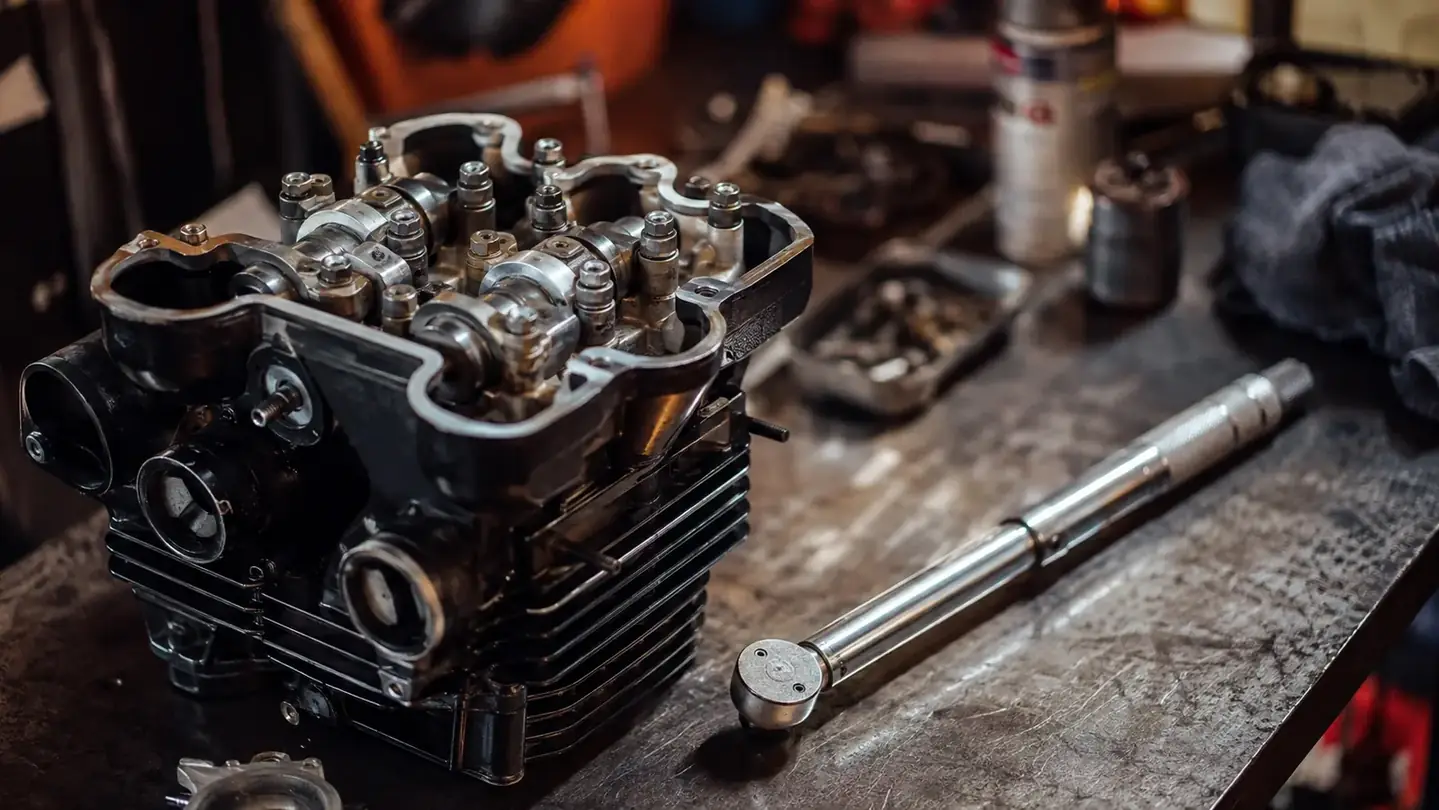
I've been wrenching long enough to have a war story about seat-of-the-pants torque, and it is the reason I started this rebuild the right way. A few years back I bolted a valve cover back on a big twin by feel, snugged the bolts like the old manuals said, and two rides later a corner bolt had backed itself out and started weeping oil past the gasket. No drama, no lockup, just a mess on my garage floor and a lesson I should not have needed to learn twice. Fasteners in an engine have a number for a reason, and feel is a terrible way to hit one.
So this winter, when I tore into the top end of my old CB750 to replace a set of rings and lap the valves, I decided every fastener was getting a real torque value. Not a guess, not a snug plus a quarter. The actual number out of the manual. That meant I needed a torque wrench I trusted to read true, and I did not want to mortgage the shop for an industrial unit I'd use four times a year.
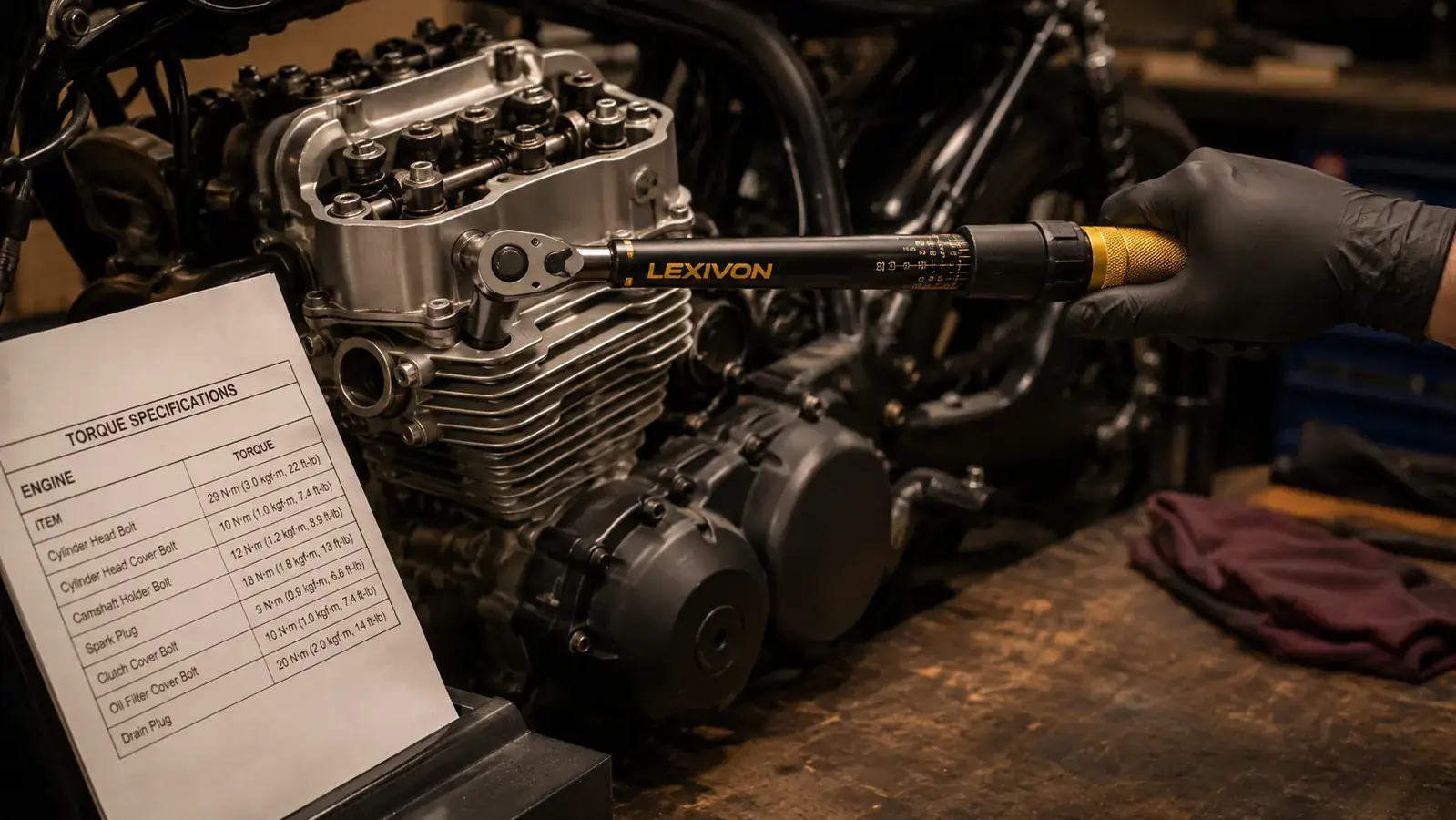
I landed on the LEXIVON LX-183, the 1/2-inch drive click style that covers 10 to 150 foot-pounds. It is the wrench every home builder ends up reading about, with tens of thousands of reviews and a price that will not make you wince. I ordered one, checked it against a beam-style wrench I keep in the box, and set about doing the whole build to spec. A click wrench is only as good as its calibration, so I wanted to know the LEXIVON really landed where the barrel said it would before I trusted a head bolt to it.
The cross-check was quick. I set both wrenches to the same number, snubbed them on the same bolt in a bench block, and felt the click land within a hair of each other. That was good enough for me. If it agrees with the beam wrench on a bench, I trust it on the engine. And I have stopped pretending I can feel torque, because I cannot, and neither can you.
The head bolts on that CB750 get a sequence and a number, 20-something foot-pounds in steps. I followed the pattern, felt the click at each step, and never once had to double-check one by feel afterward.
Stop Torquing Fasteners by Feel
Every head bolt, cam cap, and cover plate on your bike has a number. A click torque wrench the LEXIVON LX-183 trusts takes the guesswork out of every one of them.
Amazon Check Today's Price on Amazon →The click on this wrench is the whole story. You set the barrel to the number, slide it over the bolt, and pull until you feel the hard click and the drive releases. There is no guessing whether it felt tight enough. When it clicks, it is at the number, and you stop. On head bolts you work a pattern across the cylinder head in steps anyway, so the LEXIVON earns its keep on every single pass.
I torqued cam caps, cover plates, the oil pan, the front sprocket, and the axle nuts on the same build, and the range on the LX-183 covered every one of them without me having to switch tools. The low end of its range is where a lot of budget wrenches get sloppy, but this one gave a clean, repeatable click down around 10 foot-pounds on small bolts, which is where those cover-plate fasteners live.
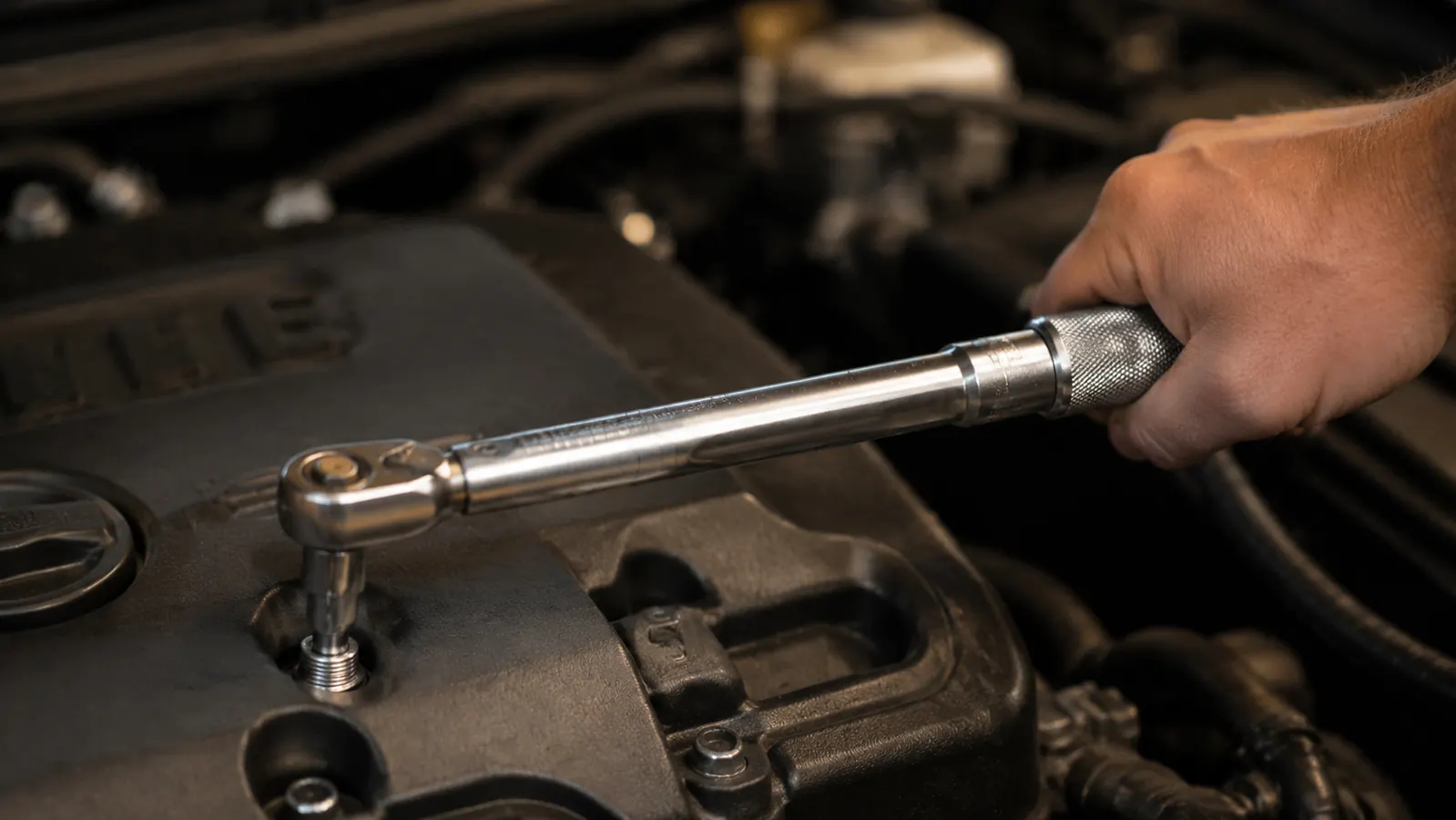
The honest part is that a torque wrench is not a magic wand. You still strip the old thread sealer, clean the threads, and put a little oil on them before you torque, because the number assumes a lubricated thread. And you store the wrench backed off, with tension off the internal spring, so the calibration does not drift. Do that, and a click wrench stays honest for years. Skip it and throw it in the drawer on tension, and you are back to guessing again.
I buttoned the engine back up, set the tappets, and fired the old bike. The real payoff came a few weeks and a lot of miles later, when I pulled the covers to re-check torque on the rebuild. Every head bolt still read at spec. Nothing had backed out, nothing was stripped, nothing wept past a gasket. After that, I don't bother pretending I can feel torque. I reach for the LEXIVON and let it tell me the number.
One thing that surprised me about the LX-183 is how it feels in use. It has a clear, audible click and a definite release, not a mushy slip you have to stare at the scale to confirm. On the CB750 rebuild I could feel the wrench let go at each number without looking down, which matters when you are leaning over an engine and your hands are covered in assembly lube. That feedback is what keeps a job honest, because the temptation on a head bolt is always to give it just a little more. The click stops you.
What I'd Tell You If We Were Sitting at My Kitchen Table
If you are about to put an engine back together and you don't own a torque wrench, stop and get one before you turn a single bolt. You don't need the pro-snapon unit with the certificate and the foam case. You need a click wrench that reads true over the range your bike actually uses, and the LEXIVON LX-183 covers exactly the hardware a motorcycle build throws at you. Set it to the number, work the pattern, store it backed off, and you will hit spec on every fastener without thinking twice. I used to rebuild by feel and told myself it was experience. It wasn't. It was luck, and luck runs out. Buy the wrench, use the number, and don't borrow trouble.
Rebuild to Spec, Not by Feel
Torque every head bolt, cam cap, and cover plate like it matters, because it does. The LEXIVON LX-183 gives you the click that means the number.
Amazon Check Today's Price on Amazon →