
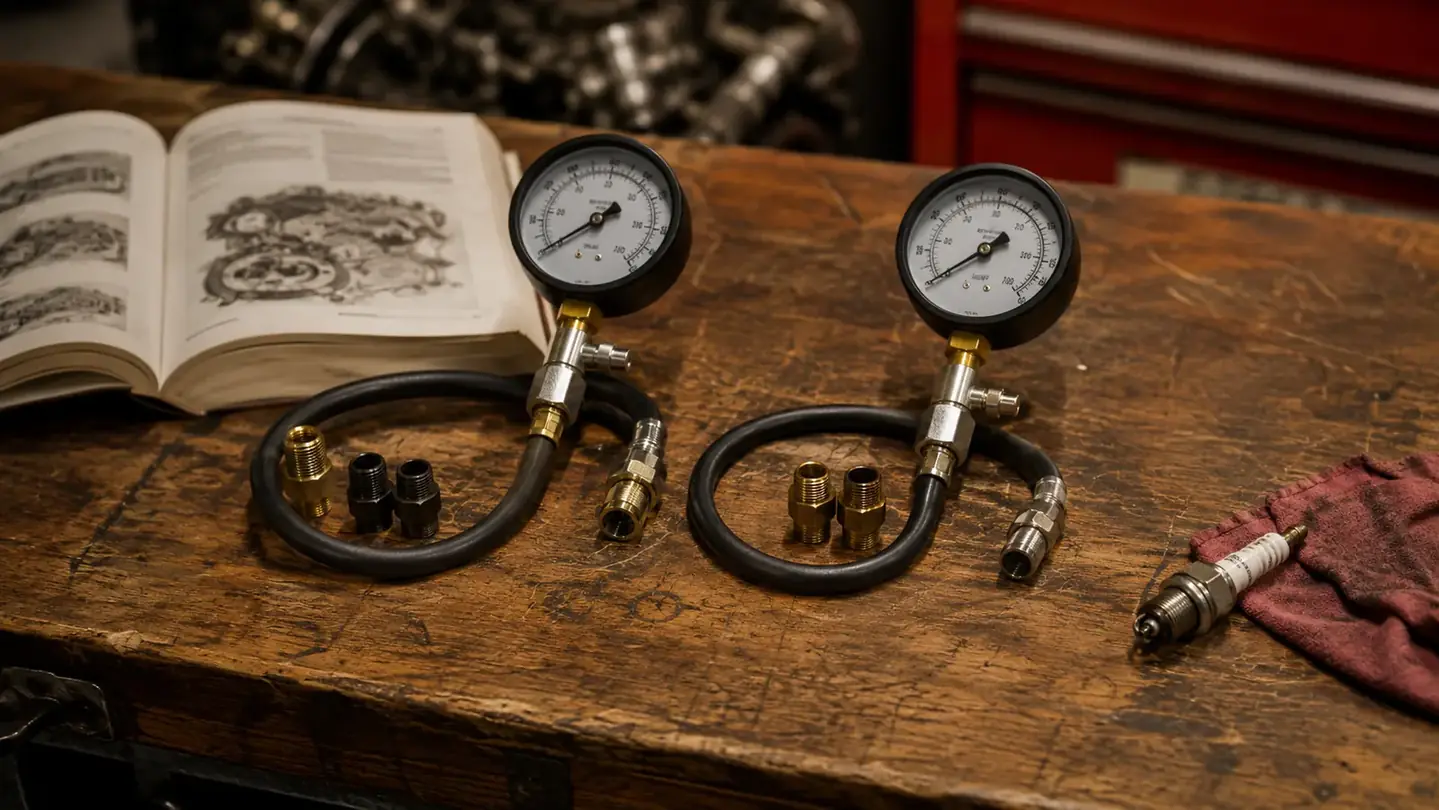
I have read compression on everything from a single-cylinder thumper to a tired six in an old hot rod, and I have owned both of these budget kits. The short answer before the weeds: for the kind of work I do on motorcycle builds, the BETOOLL HW0130 is the one that stays on my bench, and the DAYUAN is the one I am fine handing to a buddy who just wants a number out of his push mower or his truck. They cost about the same. They are not the same kit.
Both are the same idea: a round gauge on a hose with a set of threaded fittings so you can screw into a spark plug hole, spin the engine, and read cylinder pressure. Both land at the budget end of the market, which is exactly where most home mechanics start. The difference is not in the box art. It is in how the hose reaches a recessed plug, how many fittings you actually get, and how cleanly the whole thing seals when you are half-bent over a bike with your knuckles in the way.
| BETOOLL HW0130 | DAYUAN | |
|---|---|---|
| Price | Sits right at the budget end, tough to beat for what you get | Usually comes in a few dollars less on the street |
| Hose reach | Flexible hose reaches recessed and angled plugs on small engines | Stiffer setup that is fine on open plugs, harder in tight spots |
| Fitting variety | Eight-piece kit covers the metric plug threads you actually run | Fewer adapters, enough for basic work but thinner coverage |
| Adapter quality | Machined clean enough to seal without fighting the threads | Serviceable but rougher threads, finickier to seat |
| Small engine behavior | Seals and reads with fewer knuckle-busting turns on a bike | Works, but you spend more time getting a clean seal |
| Gauge readability | Round dual-scale dial, swings clear and settles readable | Comparable dial, no real advantage either way |
| Best for | Builds and bench diagnostics where you trust the number | Occasional checks on an open, accessible engine |
The kit I reach for before I tear down an engine
When a bike is down on power and I need a number before I spend on parts, the BETOOLL HW0130 is what I screw in. Decent hose reach, the fitting variety to cover real bikes, and a price that leaves money for the parts it might save you.
Amazon Check Today's Price on Amazon →How I Checked Them
I did not grade these on the box or the spec sheet. I ran both kits against a shop gauge I trust, then used them the way I actually do builds: a cold check on a single-cylinder thumper with the throttle pinned open, a wet test after a low reading on a twin to separate rings from valves, and a post-rebuild verification on an engine I did not want to tear down twice. I added a few drops of oil to the adapter threads before seating each fitting, the trick that keeps a budget seal from reading low, and I read the same cylinder back to back with each kit to see which one trusted its fitting better.
What I was looking for was not which one had the prettier dial. A compression tester fails in two ways. It leaks at the seal and reads low, which makes a good cylinder look bad and sends you chasing a problem that is not there, or it reads high enough to hide a worn ring that is about to cost you a teardown. Both of these kits stayed within a few psi of my shop gauge on an open plug, so the dials were never really the story. The story was how much fight each kit took to get to that clean seal, especially when the plug was tucked away where the engine maker never planned on a wrench.
The honest summary of the checking is that neither kit embarrassed itself. Both held calibration through the season, both sealed clean on an accessible plug, and both told me the same thing about a tired top end when I did a dry and a wet test on the same cylinder. The gap between them showed up only when the work got less comfortable, which is exactly the gap that decides which kit belongs in a builder's toolbox and which one is fine at the back of a shed used twice a year.
Where the BETOOLL Wins
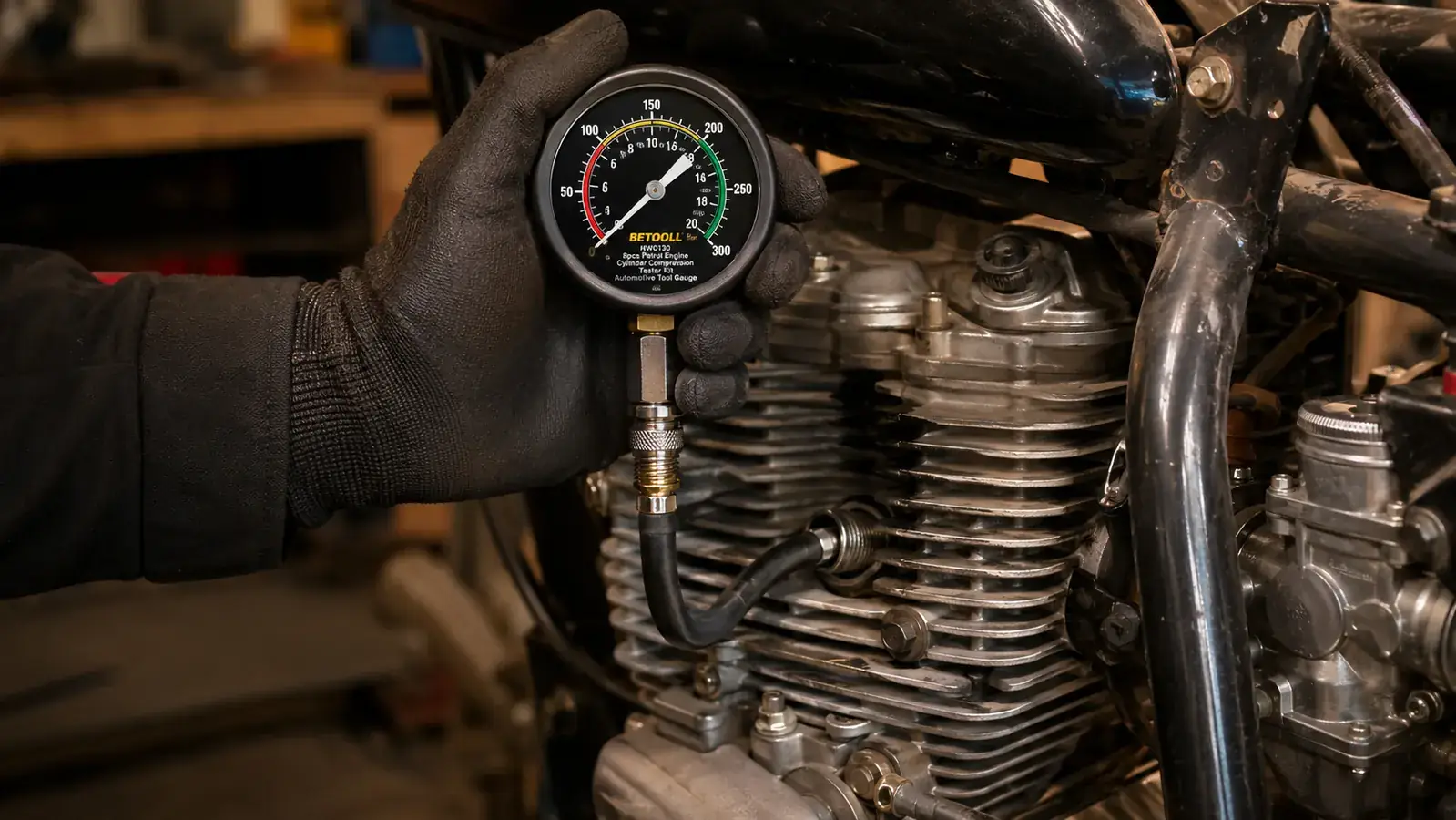
The first reason I keep the BETOOLL HW0130 on the bench is the hose. It has a flexible lead with a straight threaded end that reaches a recessed or angled spark plug the way a rigid setup cannot. On a twin with the plug tucked between the barrels, or on a single with the plug sitting down in a well, that makes the difference between a clean reading and a whole afternoon of swearing. Compression testing is already fussy because you have to hold the throttle open and spin the engine a set number of times, so the last thing you want is a hose fighting you the whole way.
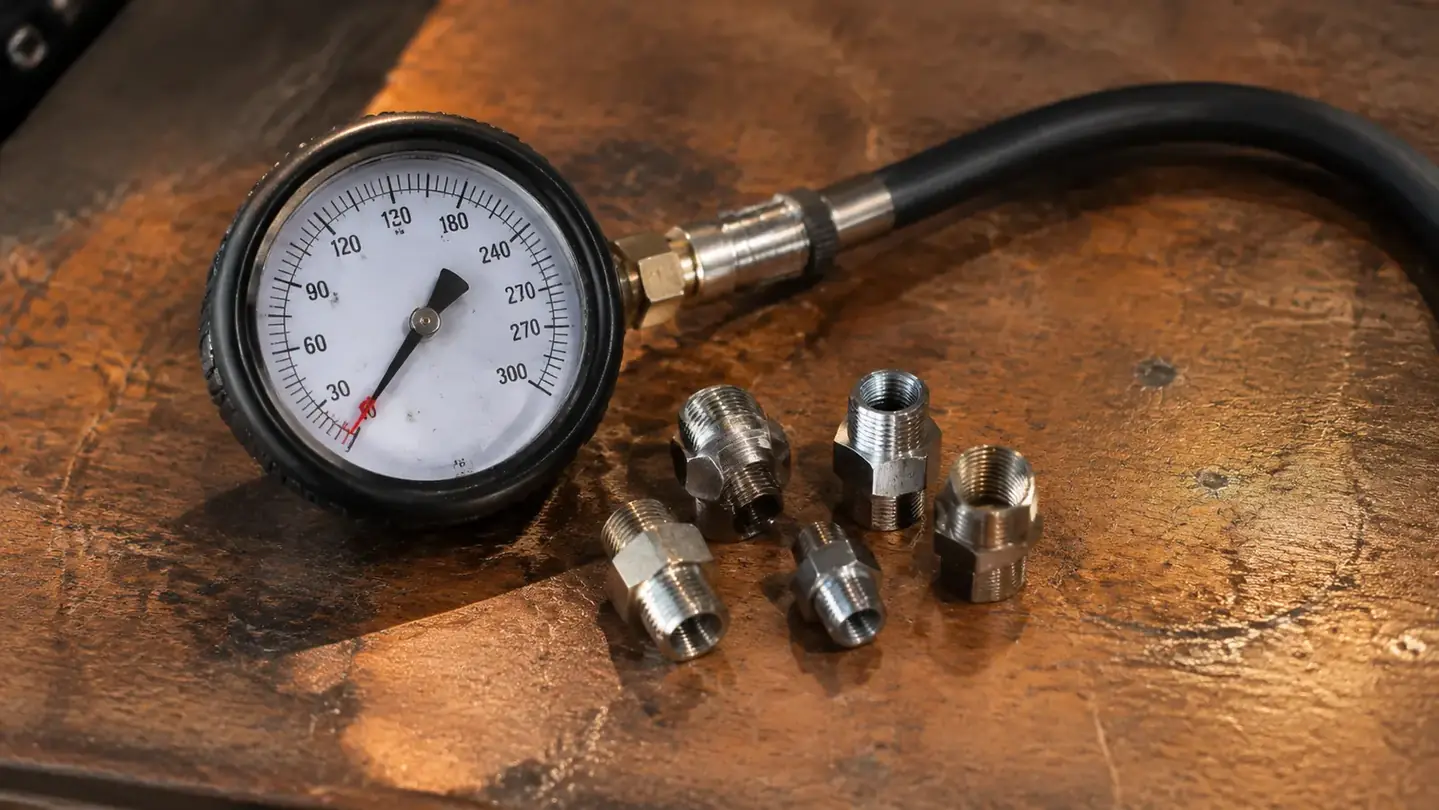
Then there is the fitting variety. The eight-piece kit covers the metric plug threads you actually run on motorcycles and small engines, from the little 12 mm and 14 mm plugs up to the bigger single and twin sizes, without you hunting for an adapter mid-job. On builds I am usually moving between two or three different bikes in a weekend, and just having the right thread in the tray saves me from taping a hose to a plug like some guys at the track still do. The DAYUAN covers the basics, but it thins out faster the wider your stable gets.
Where the DAYUAN Wins
I am not going to pretend the DAYUAN loses everything, because that is not true and it would make this comparison dishonest. It wins on price, plain and simple. It usually comes in a few dollars under the BETOOLL, and for a guy whose tester gets used on a push mower, a small outboard, or the occasional truck that is down on power, that cheaper number is the right answer. You do not need the flexible hose and the wide fitting fan to get a number out of an open, accessible plug.
It also wins on simplicity for the occasional user. There is less box to carry and fewer parts to keep track of, which honestly suits the guy who does not rebuild engines and just wants to know whether the compression on his old sedan is in the ballpark. For that job the DAYUAN reads fine and holds its calibration like any of these budget gauges. It is a genuinely capable cheap kit, and for a lot of homeowners it is all they ever need. That is not a knock on it. It is knowing the difference between a kit built for bench diagnostics and a kit built for a quick number.
On a small motorcycle engine, where the plug is recessed and the seal is everything, hose reach is what separates a clean reading from an afternoon of swearing.
The Truth About Budget Gauges
Be honest with yourself before you buy either kit. These are budget tools, and budget gauges do not read like the lab equipment in a machine shop. The needle bounces a little as the engine cranks, and it settles on a number that is close enough to tell you what matters, which is whether the cylinders are near each other and near the ballpark for that motor. For a compression test, the diagnosis lives in the spread between cylinders and in how the number moves between a dry test and a wet test. Neither of these gauges is the thing that decides that call. Both are accurate enough to make it.
The other thing that applies to both is how the kit is stored and handled. The fittings are all-thread aluminum, which means they are soft by nature and will eventually strip if you reef on them or cross-thread them into a plug hole. That is not a brand failing, it is physics at a budget price. Keep the threads clean, seat them by hand before you snug them, and never force a fitting into a hole it is not sized for. Do that and either kit will last you through a lot of readings. Rush it and you will be ordering replacement fittings, likely from either brand.
What both get right is the core job: a threaded fitting into the plug hole, the hose to a readable dial, and a number you can trust to within a few psi of the shop gauge I ran both against. Both held calibration through the season, both sealed clean on an open plug, and both would tell me the same story about a worn ring on a dry versus wet test. The gap between them is not accuracy at the dial. It is everything upstream of the dial, the reach, the fittings, and how easily the whole thing cooperates when you are working on a bike.
Where Both Fall Short
No budget compression kit is a substitute for a proper leak-down test. Compression tells you whether the cylinder builds pressure, but it will not point at the exact leak the way air hissing out of the intake, the exhaust, or the breather will. If a reading comes back low, the wet test tells you whether the problem is the rings or the valves, and after that you still go to the leak-down rig to pin the spot. Buy either of these kits knowing it is the first step in the diagnosis, not the whole story.
The other shortcoming is the threads, and it applies to both of them equally. The soft all-thread fittings are the detail every budget review hedges around, so let me be direct: the day you cross-thread one into a plug hole is the day you earn a helicoil. Seat every adapter by hand before you snug it, keep the threads clean, and never assume that a fitting which refuses to start is the right one. Do that and either kit will read true for years. Rush it and you will be explaining to yourself why the fitting is now part of the head.
Who Should Buy Which
If you build, which means you are compression testing bikes of different sizes, chasing a low cylinder, or verifying a top end before the first kick, buy the BETOOLL HW0130. The hose reach and the fitting variety pay for themselves the first weekend you work on more than one engine, and the whole kit earns a permanent spot on the bench instead of hiding in a drawer. It is the kit I reach for when the difference between a good diagnosis and a tear-down done on guesswork is one trustworthy number.
If your compression tester is for the push mower, the small outboard, the generator, or the rare truck check, buy the DAYUAN and pocket the difference. There is no shame in that and it is the honest call. You are paying for reach and fitting coverage you will barely touch, and the DAYUAN is a perfectly solid tester for the work you actually do. My rule is simple: the deep bench work gets the BETOOLL, and the occasional open-plug check gets whatever is already in my hand. If that makes the BETOOLL the one I screw in on a build, it is because a build lives on the number.
Buy it once, read every build before the first kick
The BETOOLL HW0130 has earned the permanent spot on my bench. If you are done guessing at a bike's health by ear, this is the kit that gives you a number you can trust.
Amazon Check Today's Price on Amazon →