
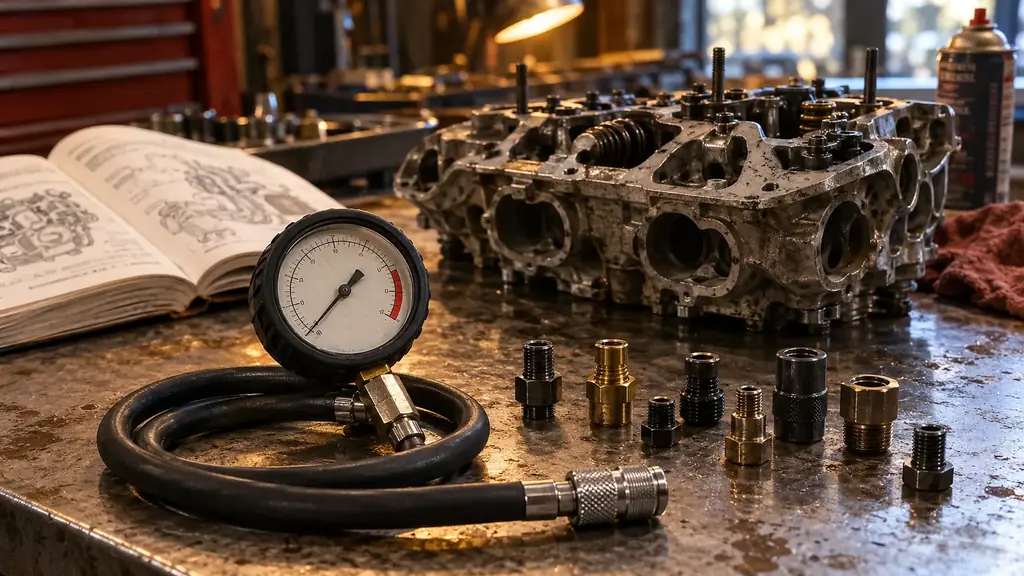
The first time I kicked over a fresh top end and heard that crisp snap instead of a rattle, I knew the gauge in my hand had just paid for itself. That is the thing about compression. It tells you more about an engine than any spec sheet or listing photo, and it does it before you spend a dime on parts. I bought the BETOOLL HW0130 kit the same way most of us end up with tools, because I needed one number and the shop price for a gauge was more than the whole kit at home.
A year later it has read every engine I have touched, a 1982 CB750 inline four, a single-cylinder dirt bike that was burning oil, an old V-twin that had been sitting in a shed, and a big-rig engine where a cylinder was holding back. It has done cold checks, warm checks, dry tests, and wet tests to separate a ring problem from a valve problem. I have some strong feelings about it now, including where it acts like a budget kit. Let me walk you through a year of readings.
The Quick Verdict
For a garage builder the BETOOLL HW0130 is the right first compression kit. It reads consistently, the adapter selection covers twin and four-cylinder bikes, and it will point a finger at a ring or valve every time. Tighten the fittings by hand and treat it gently and it will earn its spot on the bench.
Amazon Check Today's Price →Before you tear an engine down on a guess, get a number instead.
A year of cold checks and post-rebuild verification and the BETOOLL HW0130 is the kit I reach for every time. Check today's price on Amazon and see if it earns your bench too.
Amazon Check Today's Price on Amazon →How I've Used It
A compression tester is not a tool that lives in your hand every day, but it is the tool you reach for at the two most important moments in a build, before you tear something down and right after you put it back together. I use the BETOOLL kit on a worn engine to decide whether a cylinder is worth saving or ready for a hone and rings. I use the same kit after a rebuild to confirm each cylinder is seating before I ever swing a leg over the bike.
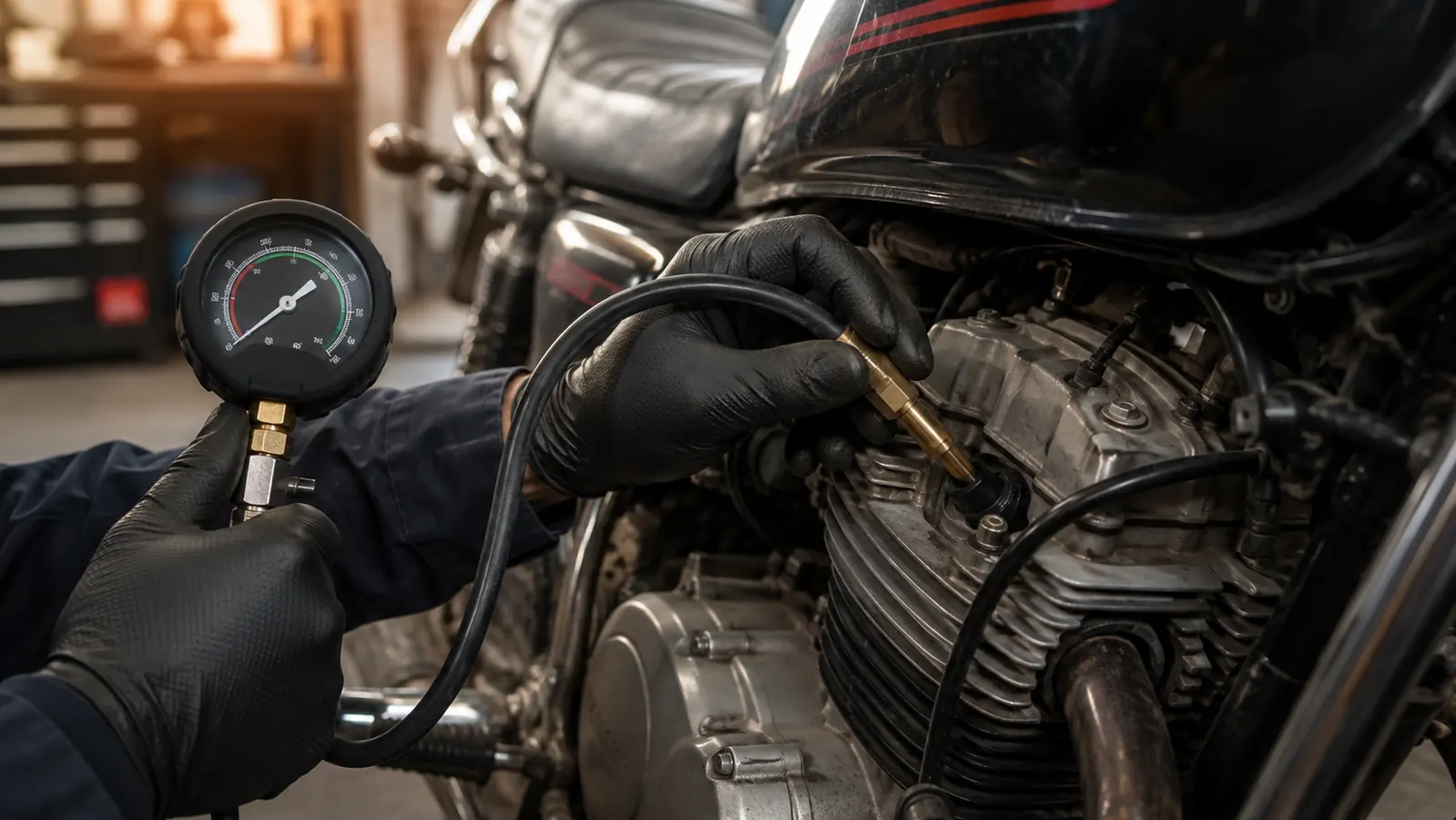
The routine is the same every time. I pull the kill switch so the ignition cannot fire, open the throttle all the way, and kick or crank the engine through a handful of revolutions until the needle stops climbing. You do a dry pull first, then a couple more, and if a cylinder comes up short you back the plug out, squirt a little oil in, and pull again. That wet test is how you tell a worn ring from a burned valve, and the BETOOLL kit reads both cleanly.
Over the year I have leaned on it hardest on that CB750. Rebuilt top end, and the four cylinders came in at 145, 145, 143, and 144, all within a couple of pounds of each other, which is exactly what you want to see. That kind of consistency across a four-cylinder is the gold standard for a healthy build, and it is the reading this kit gave me without complaint. On the single-cylinder dirt bike, one cylinder came in about 40 pounds short on the dry pull and jumped close to normal on the wet test. That is a textbook ring diagnosis, and it cost me a top end rebuild instead of a whole engine.
The Kit: Eight Pieces That Actually Cover Your Engines
What sold me on this kit over a bare gauge is the adapter selection. The HW0130 comes with eight pieces, the gauge, a flexible hose, and a set of threaded fittings that cover the plug threads you actually find on bikes and small engines. That is the whole reason the package shines. A single-fitting gauge is useless if the first bike you test takes a thread your gauge does not have, and this kit avoids that trap for most of the hardware I touch.
The hose is the part that matters more than people think. On a motorcycle you need reach to get from the plug hole out to where the gauge can sit without fighting the frame, the tank, or the handlebars. The flexible hose on this kit is long enough to route out of the way on most bikes, which is a bigger deal than it sounds. On the V-twin I had it looped over the side cover with the gauge resting on a rag on the engine, and the whole test went without a wrench hula-dance.
The gauge face is easy enough to read, with a range that covers the numbers you care about on street bikes and small engines. On the big-rig engine the scale still read low enough to matter, and on a hot rod flathead I did a couple of years ago it handled those numbers just as cleanly. The rubber boot on the case means a drop onto concrete does not crack the face, and I have tested that theory more than once when my hands were greasy.
Two cylinders came in forty pounds apart. One squirt of oil later the short one jumped back up, and the wet test told me it was rings, not valves, before I pulled a single cover.
How the Gauge Behaves
The most important thing I look for in a compression gauge is whether the needle holds. A gauge that softly falls back as soon as you stop cranking is telling you it is leaking someplace, and that makes your number a guess. The BETOOLL gauge holds its reading well. When you stop kicking, the needle stays put long enough to read it calmly instead of trying to catch it mid-swing, which is the difference between a number you trust and one you squint at.
Is it lab-accurate against a shop regulator? No, and I would not claim it is. But for what a compression tester actually does, consistency beats absolute precision. I care less that a cylinder reads exactly 144 and more that all four read within a couple of pounds of each other. That is how you find a weak cylinder, by comparison, and this kit is consistent enough to trust those comparisons every time I have used it.
The one behavior you should know about is the needle settling slightly once the hose flexes and the fitting seats. The first reading on a cold engine will climb in steps as you crank, then settle. That is normal with any kit of this type. The trick is to keep the throttle open and crank until the needle stops climbing, then give it one or two more revolutions to be sure. Do that and the BETOOLL kit gives you a solid, repeatable number every single time.
Cold Checks vs Warm Checks
For a motorcycle you do most of your compression checks cold, and that is fine, as long as you compare like with like. Cold numbers run a little lower than warm ones, because everything is sitting at ambient and the oil is cold and thick. The point of the test is not to match a book number to the pound. The point is to find a cylinder that stands apart from its brothers, and cold readings do that job perfectly well on a bike.
I use a warm check when I want the numbers closest to running condition or when I am chasing a hot hard-start complaint. Warm the engine, pull the plugs quickly, and run the same routine. The warm numbers will read a little higher and settle faster. The BETOOLL kit handles both, and the different circuits, the two-cylinder and the four-cylinder, sit in the set so you are not sharing seal surfaces between different size engines.
The dry versus wet comparison is where this kit earns its keep. A cylinder that is low on the dry pull and climbs back toward normal after you add a few drops of oil is worn rings. A cylinder that stays low on the wet pull is a valve or head-seal problem. That single test saved me from buying a head gasket and valve job on the dirt bike when the real fix was a set of rings. It is the difference between spending on the right part and throwing money at the wrong theory.
Post-Rebuild Verification
The other half of this kit's job is the moment every builder waits for, the first time you kick over an engine you just put back together. A compression test right after a top end tells you whether the rings seated and whether all the cylinders are within shouting distance of each other before you risk riding on it. That is not a luxury. It is the same reason you torque head bolts to spec instead of by feel. You verify the work before you trust it.
On the CB750 rebuild the readings landing within two pounds of each other across all four cylinders was the confirmation I needed to button everything up and ride. On a hot rod engine I helped a friend with, the test caught a cylinder that was down a few pounds because of a single exhaust valve that had not fully seated. We lapped it, re-tested, and watched it come back into line before the engine ever had to run under load. That is the kind of thing you only catch with a gauge in your hand.
Where It Gets Finicky
I told you I would be honest, so here is where the budget shows. The fittings and adapters thread together fine, but they are machined to a price, and you have to seat the rubber cone or the threaded insert firmly by hand or you will bleed pressure and read low. On a stubborn plug hole, especially one with a long reach, you have to push and hold the fitting square or the test turns into a guess. That is the number one thing that trips up a first-time user with this kit.
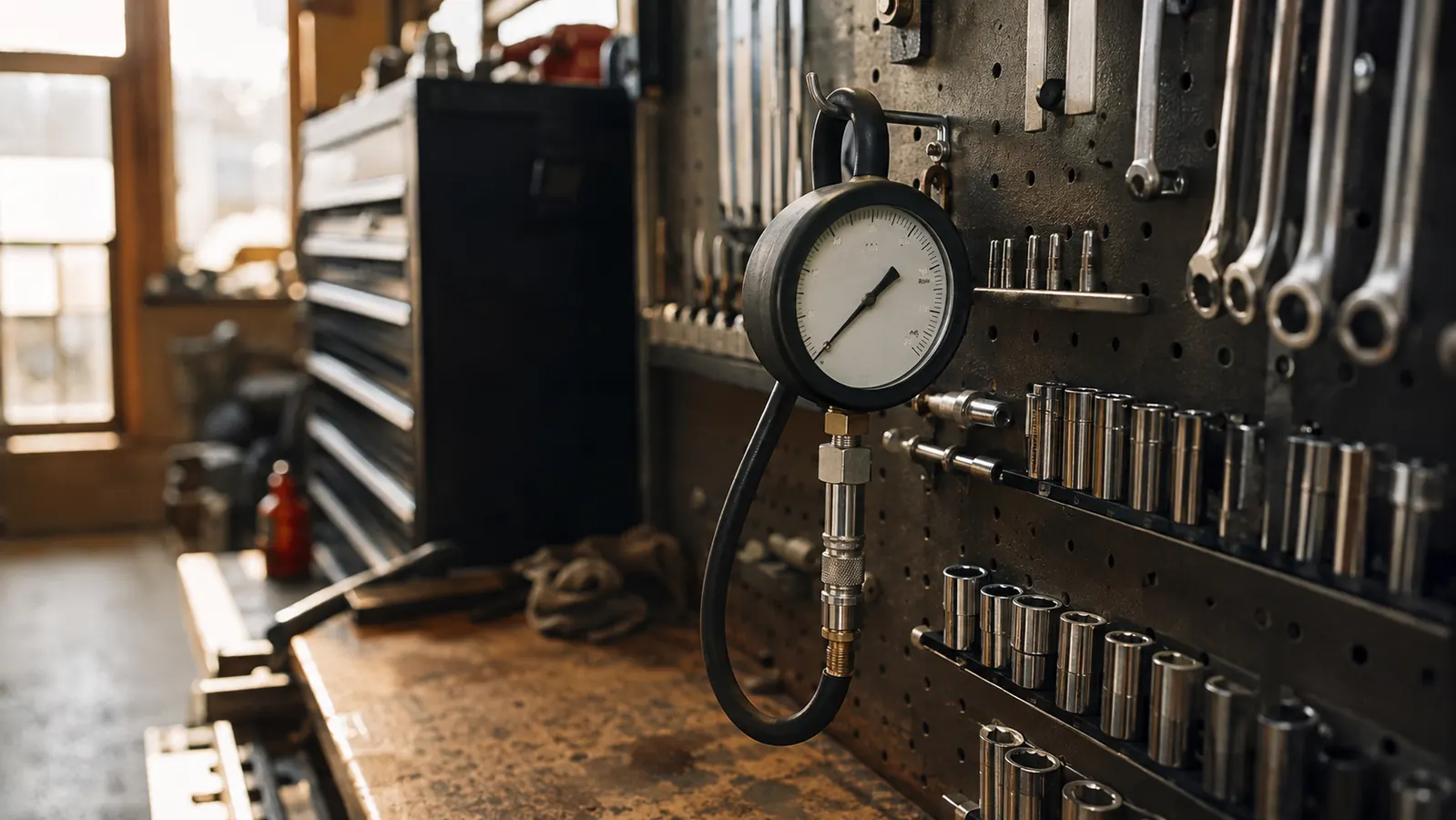
The fittings can also feel stiff and gritty the first couple of times you thread them together, and the case, the little clamshell the whole set rides in, is plastic and does not love being shoved into a loaded toolbox. I keep mine on a pegboard hook so the adapters do not get lost or dented at the bottom of a drawer. None of that stops the gauge from reading well, but it is fair warning that you are getting a working tool, not a showroom instrument.
The other finicky spot is the one reading style that fights any kit in this class, the wet test on a narrow plug hole. Getting the oil in without flooding everything and then keeping the fitting sealed while the crank turns takes two hands and some patience. It is not a flaw in the BETOOLL specifically, but it is the part of the process you should expect to be fiddly the first time. Plan for it, take your time, and the answer is still there at the end.
What I Liked
- Eight-piece kit with adapters that cover the plug threads on bikes and small engines
- Flexible hose long enough to route around a tank and reach out of the way on most bikes
- Needle holds its reading so you get a number you can trust instead of a guess
- Consistent enough to spot a weak cylinder by comparison every time
- Gauge holds up to a drop onto concrete thanks to the rubber boot
Where It Falls Short
- Fittings must be seated firmly by hand or you bleed pressure and read low
- Adapters feel stiff and gritty until they seat a few times
- Included plastic case is cheap and does not protect the pieces inside a loaded box
- Wet test on a narrow plug hole is fiddly and takes two hands and patience
Who This Is For
If you build old bikes, resurrect anything that has been sitting, or put top ends back together and want proof before you ride, the BETOOLL HW0130 is the kit to start with. It is the right first compression tester because the adapter selection means it actually works on the bike in your shed instead of only on a car in a YouTube video. It will tell you whether a cylinder is worth saving or due for rings, and it will confirm your rebuild before the first kick matters.
Who Should Skip It
If you need to back up a compression reading with a full leakdown test on a professional level, or you are doing this kind of diagnosis all day in a shop, buy a proper series of gauges and a leakdown kit instead. And if the threads on your particular machine are not in the adapter set, check the thread size against the list before you buy. For a garage builder who knows the value of a number before a teardown, though, this kit has been exactly the tool I needed for a year and counting.
Every engine you raise from the dead deserves a reading, not a guess.
The BETOOLL HW0130 has confirmed every rebuild and flagged every worn ring on my bench for a year. Check today's price on Amazon and see if it earns a spot in your shed too.
Amazon Check Today's Price on Amazon →