
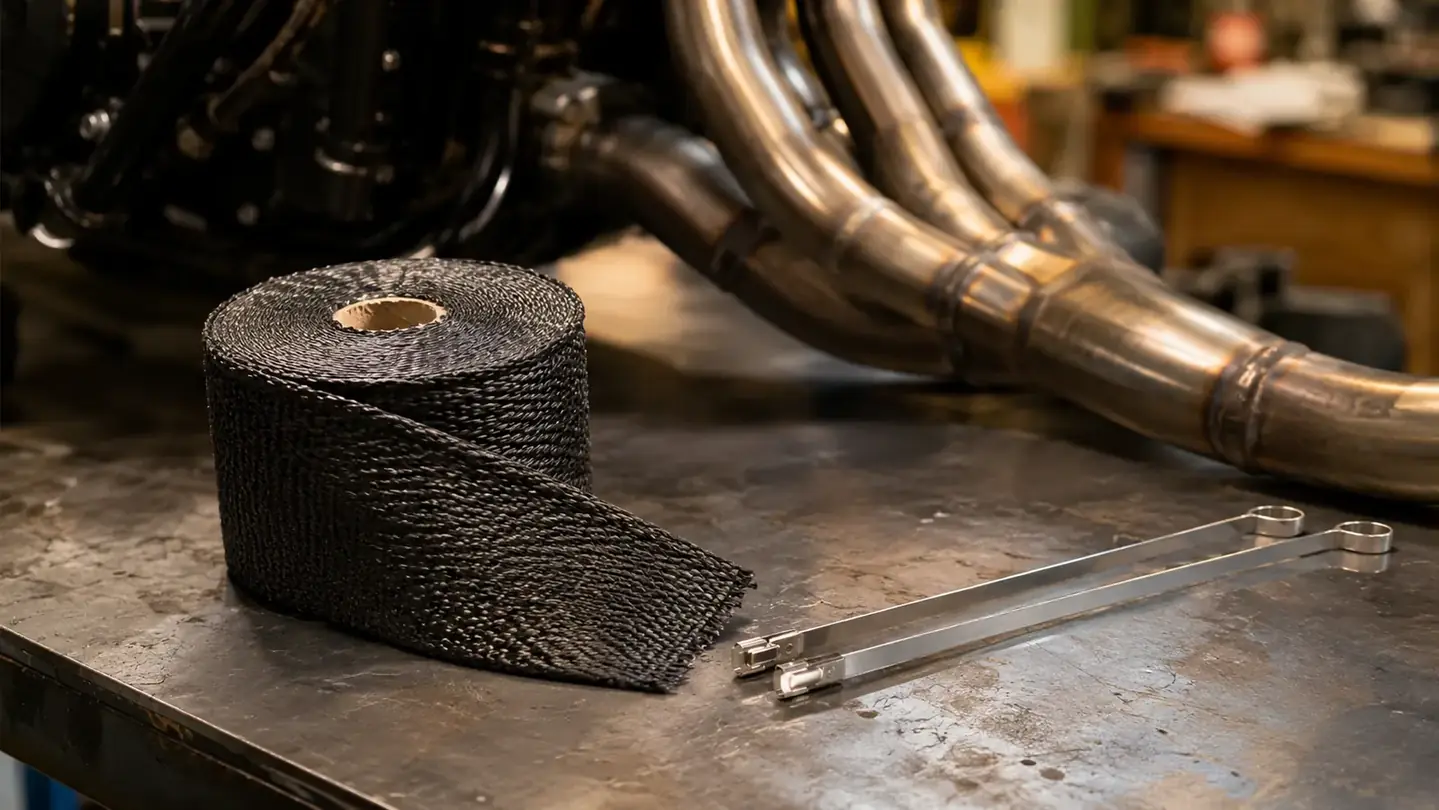
The product video makes it look easy. A roll of black weave, a wet cloth, twenty minutes, and your header comes out looking like a factory racer. Nobody in that video mentions the first time you lay a bare hand on dry fiberglass and spend the next two days scratching arms that are not visibly red but itch anyway. Nobody mentions that you will be cutting lengths, vacuuming the bench, and doing it all with the garage door cracked open so you are not breathing the dust. I wrapped my header with a SunplusTrade roll last spring, and I would buy it again. I just want to be straight with you about what the photos leave out.
This is not a five-star-forever piece. The wrap does its main job, which is cutting the heat off your leg and off the oil, and it does it well for the money. But it dusts, it frays at the edges, it dulls through a winter, and it will hold moisture against the pipe if you wrap a bike that lives outside. You should know all of that before you open the box, not after you are three feet into a roll and committed. That is the whole point of this one. Everything below is what I wish the listing had told me.
The Quick Verdict
For the price, SunplusTrade does the core job and does it well: it tames pipe heat and holds up through a season of riding. Just know the fiberglass dust is real, the 50 feet may not cover a full system if you wrap double-layer, and the wrap will fade and fray before it fails. Buy it expecting scuffs, not a showpiece.
Amazon Check Today's Price →Want the heat off your leg without paying catalog prices?
I wrapped my header with SunplusTrade and it cut the heat for less than a season of riding costs in fuel. Check today's price on Amazon, but read the rest of this first so you know what you are signing up for.
Amazon Check Today's Price on Amazon →How I've Used It
I put the SunplusTrade on a 900cc cruiser header that runs hot enough in July that the pipe would blister the back of my calf if I sat at a light too long. The whole point was leg heat and keeping the oil sump from cooking on long hot miles. I did it my way, which means I used the basics that make any fiberglass wrap work and treated the roll as raw material rather than a kit.
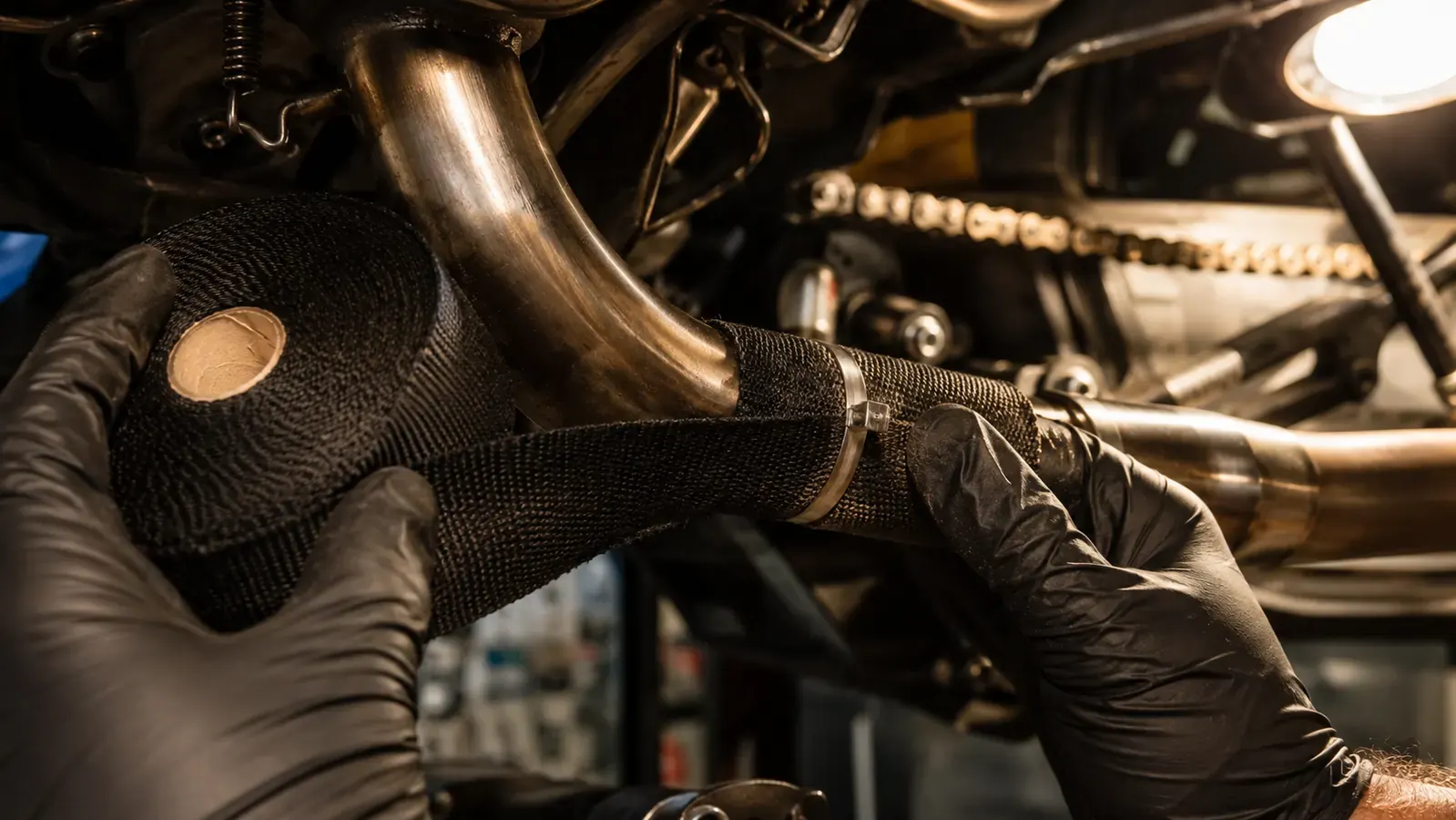
First I read the one thing the listing does not spell out loud enough: you should wet the wrap to install it. The SunplusTrade roll arrives dry and woven tight, and dry fiberglass is stiff and sheds dust with every bend and tug. I soaked the sections in a bucket of warm water as I went, and the wet weave went on flat, tightened around the curves, and settled into the overlaps without fraying as I pulled. Try to wrap it dry and you will fight it, snag threads, and send dust everywhere. Wet it and the job goes like the video, minus the part the video skips where you are wearing gloves and a dust mask.
I overlapped the weave about half a width as I spiraled up the pipe, which eats length twice as fast as butting the edges. Here is the honest part about the 50-foot math. On a four-into-one header or a single long pipe, a single-layer wrap with a modest overlap will usually do it. On my bike, wrapping the primary pipes with a proper overlap meant I used nearly all of the 50 feet and still had to stretch the tail. If you plan to double-layer or you are covering a full two-into-two system, one roll is not enough. Buy knowing that the length on the label is generous only if you keep the overlap tight.
The one shop trick I would hand you is the flame-guard layer at the head. The hottest spot on a wrapped pipe is the first eight inches off the flange, where the exhaust gas is at its meanest, and that section takes the most raw heat and the most road blast. I went back over that stretch with a second, thin pass of the same SunplusTrade weave and tied both layers down with a stainless band just past the head pipe. That doubled section took the worst of it, and it is the part that faded and shed the most, which tells you it earned its keep. If you only do one improvement beyond the basic job, do the double layer at the flange; it costs a couple of feet of roll and buys the rest of the wrap a longer life.
The Fiberglass Dust You Cannot Un-See
The single biggest thing the promotional photos leave out is the dust. Every time you cut the weave, every time you pull a length across the bench, every time you cinch a tie and the edges bristle, you launch a haze of fine fiberglass into the air and onto your forearms. With bare hands, that haze is a real nuisance. The fibers are invisible until they are on your skin, and then they itch in a way lotion does not touch because nothing is lodged visibly, it is micro-fiber against the grain of the skin.
I learned this the hard way on the first wrap attempt, and I will not repeat it. Long sleeves that you take off outside the shop, latex or nitrile gloves, a dust mask if you value your lungs, and the garage door open. Cut the weave over a trash can or a piece of cardboard and keep the loose ends off the bench. This is not a reason to skip the product, every fiberglass wrap does this regardless of brand. It is a reason to treat the install like a job and not a fun afternoon project, because the itching is the kind of thing you only forget once.
Every time you cut the weave and cinch a tie, you launch a haze of fine fiberglass into the air. Gloves, long sleeves, dust mask, and the garage door open. You will only forget this once.
What a Season Does to the Finish
Here is what the unboxing photos do not predict. A fresh roll of SunplusTrade comes out of the package a rich, even black. The weave looks sharp, and for the first few rides it stays that way. Then the heat does what heat does to any fiberglass. The resin and sizing that hold the weave together cook off, and the black fades to a flat, light gray that leans toward the color of dust. On my bike this happened gradually over the summer and settled into a matte stone tone by fall. If you wrapped your pipes for the look, expect the look to be the first thing that goes.
The first few heat cycles are where you notice the change most. The sizing and binder that keep a new roll stiff and neat burn off in the first handful of rides, which is why a fresh wrap smells faintly of warm resin the first two or three times you fire it. That smell is the binder leaving the weave, and it is also why the wrap goes from crisp to slightly fuzzy in the same window. It is not the wrap failing; it is the wrap curing down to the bare glass fiber doing the actual insulating. Just do not let it worry you the first time you catch it at a stoplight.
It also dulls faster after moisture. Fiberglass wrap is porous, and it drinks up road spray and rain like a sponge. When it soaks and dries, it dries lighter and a little stiff, and over repeated wet-dry cycles the weave loses that soft, uniform black. This is another honest con. If your bike lives outside or you ride in the wet, the wrap will show age quicker than a painted header ever would, and there is no trick to keep the black; it is a fiber that turns gray with heat and time, and no dressing fixes that kind of fade.
A rain-soaked season is where the wrap earns or loses my respect, and this roll earns it. We had a wet stretch last fall where the bike sat under a cover for three weeks, and I expected the weave to come out matted and stinking like a soaked rag. Instead it dried back to the same flat gray, only slightly stiffer, and the stainless ties left no rust streak on the pipe or the wrap. The delayed heat of the next ride cooked the damp out fast. I would not store a bike wet all winter under the weave, but a season of normal rain is not the killer the moisture warning makes it sound like, as long as you ride it dry afterward.
The fray is connected to the same thing. The edges of the weave are the weak point. Wherever a cut end or a tie sits, the fibers bristle and pull loose over time, and you get little stragglers sticking up off the wrap like the edge of worn rope. It is cosmetic, it does not undo the heat job, and you can trim it back with scissors. But if you are a detail guy who cringes at a rough edge, this will annoy you every time you look at the pipe. It is the nature of woven fiberglass, and this roll is no exception to it.
The Ties and the Trapped Moisture
On the hardware side, I want to be fair. A lot of cheap wrap rolls ship with flimsy clamps that strip the first time you cinch them. The SunplusTrade comes with stainless steel band ties, and they are the good kind. They hold the wrap snug, they do not corrode in the weather, and the ones I tightened down have not backed off or gouged the weave. That part of the product is genuinely better than the price would suggest, and I credit the brand for not cheaping out on the thing that actually holds the pipe together.
The moisture is the real caveat, and it is the one I would flag hardest. Fiberglass wrap holds water against the pipe. That is what porosity means. On a bike that lives in a garage and gets ridden, it is not a problem, the heat burns the moisture out of the weave on the next ride. But on a bike that sits outside through a wet winter, or one that gets pressure-washed, you can trap moisture under the wrap against the steel for months, and that is a corrosion setup you do not want on a header you like. First season I saw a little surface haze under the weave when I pulled a section back. I cleaned it, dried it, and rewrapped, and now it is fine, but I have also stopped pressure-washing the pipe and I pull the wrap off and check the steel once a year.
What I Liked
- Cuts pipe heat and leg heat noticeably, the main job and the one it does well
- Wet wraps on flat and tight, settles into the curves without fighting you
- Stainless ties are the good kind, they hold snug and do not corrode or back out
- One roll prices out cheaper than a painted or coated header, and replaces easily
Where It Falls Short
- Fiberglass dust and itch on every cut and cinch, you need gloves, sleeves, and a mask
- The 50 feet runs out fast if you overlap properly or double-layer a full system
- The black fades to a flat gray within a season as heat and moisture cook off the sizing
- Edges fray and bristle over time, cosmetic but hard to ignore on a clean bike
- Traps moisture against the pipe, so a bike that sits wet outside needs the wrap pulled for inspection
Install Tips I Wish I'd Had Day One
Since the dust, the fade, and the moisture are all manageable if you plan for them, let me give you the short version of what I would tell a friend before they crack the roll. Lay out every length you think you need before you wet anything, and mark the overlaps, because once the weave is soaking it is covered in water and hard to measure cleanly. Work a pipe at a time instead of trying to do the whole header in one go, because the wet wrap does not wait for you and it stiffens as it dries. Keep a spray bottle of water handy so a section does not dry out mid-wrap and start shedding dust again.
Think about how the wrap degrades before you install it, because a little foresight saves a full redo. The wrap shrinks as it cures; the weave tightens the first time the pipe gets hot, so a gap that looks fine on the dry bench can pull open once it heat-cycles, especially on a long straight with a light overlap. So keep every overlap a clean half-width and never rely on a single narrow lap over the hottest stretch, that is where the shrink shows first. Then after the second or third ride, re-check every tie and re-crimp the ones that went slack. On mine the end tie never moved, but the crimp at the crossover needed a light re-tighten around the three-month mark. That is a two-minute check with pliers on a cool pipe, and exactly the maintenance the five-star reviews never mention.
The Honest Bottom Line
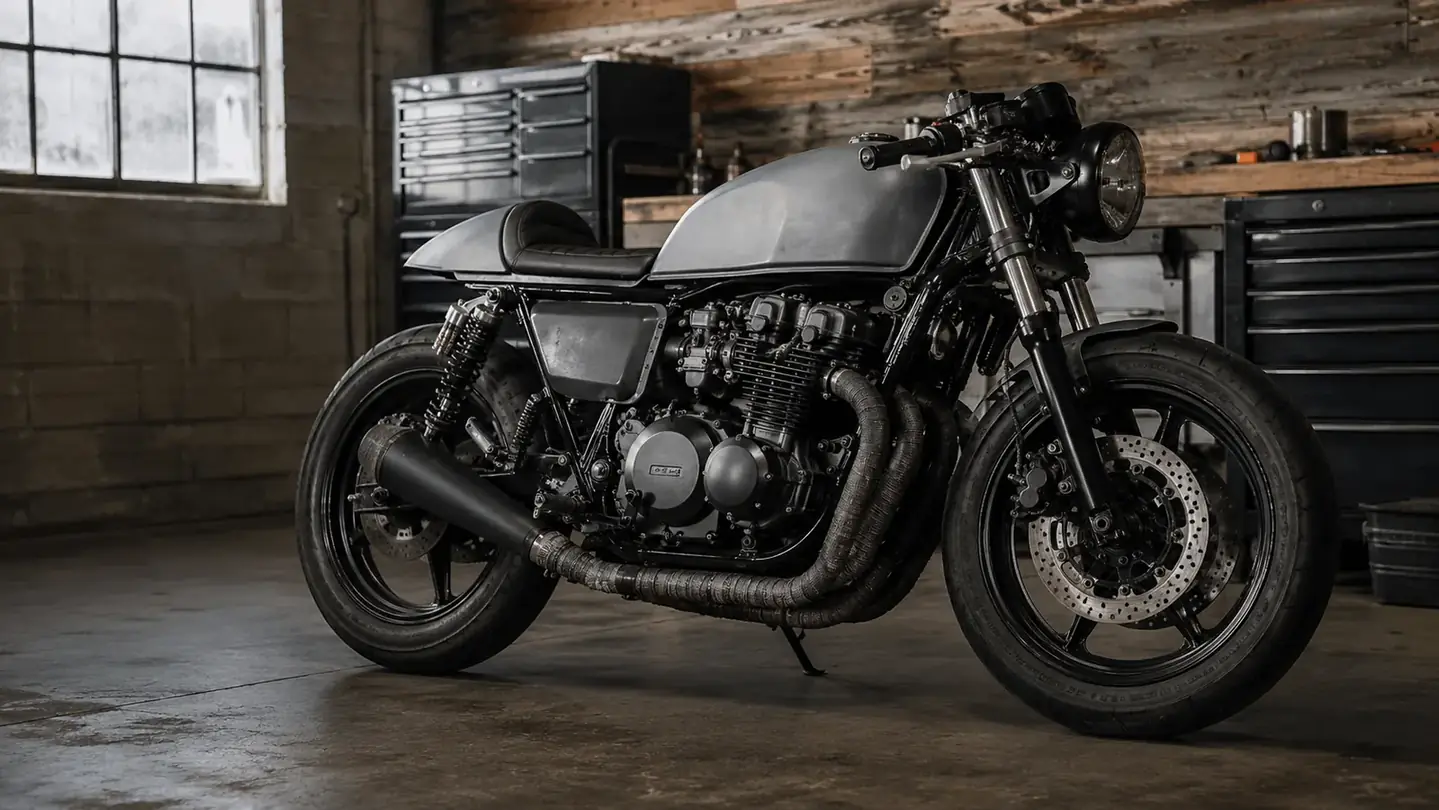
Would I wrap another pipe with SunplusTrade? Yes, and I already plan to, because the core job matters more to me than the finish. The heat off the leg is gone, the oil stays cooler on long rides, and the bike rides the way I wanted it to. The trade I made is that I do not have a shiny black header anymore, I have a gray, slightly frayed one that manages heat for a price that does not insult me. If you buy it for function and go in expecting the fiberglass dust and the fade, you will be satisfied. If you buy it because the unboxing video looked pretty, you will be let down by month three.
The honest version is this. SunplusTrade is a good budget wrap, not a magic one. Wet it, wear protection, overlap it tight, and accept that the black does not last. And for the love of a clean bench, keep your bike dry or pull the wrap to check the steel once a year, because moisture under the weave is the one thing that turns a cosmetic product into a real problem.
Who This Is For
Wrap your pipes with SunplusTrade if you ride a bike that cooks your leg or your oil, if you are building on a budget and cannot justify a coated header, or if you like the wrapped look and do not mind it aging into something more utilitarian. It is the right roll for the rider who wants the heat managed, knows what fiberglass costs in dust and maintenance, and is not going to sob the first time the black goes gray. For that builder it is a genuinely sensible buy, and I would hand the roll to a friend without a second thought.
Who Should Skip It
Skip it if your bike lives outside in the rain and you will not pull the wrap to check the steel, because trapped moisture is a corrosion ticket. Skip it if you are chasing a clean show finish that has to stay black, because nothing short of a ceramic coating will hold that look, and this wrap will not come close. And if you expect the 50 feet to cover a full two-into-two system on one roll, double it now rather than run out halfway, because running out mid-wrap is the most frustrating way to spend an afternoon. For everyone else, as long as you go in with your eyes open about the dust and the fade, it is one of the better value wraps I have put on a pipe.
Know the dust and the fade going in, and this wrap is a genuinely good value.
It cut the heat off my leg for less than a coated header would cost, and I would do it again tomorrow. Check today's price on Amazon, buy the roll, and budget for gloves and a mask before you start.
Amazon Check Today's Price on Amazon →